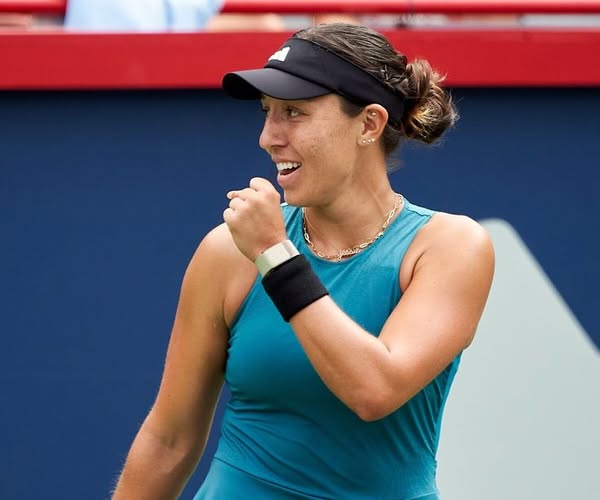
For weeks, the narrative surrounding Katie Boulter’s upcoming clash with Jessica Pegula at the Mutua Madrid Open seemed written in stone: a dominant American powerhouse versus a British player struggling to find her rhythm on the red dirt. Pegula, riding a perfect spring streak and a 6-4, 6-4 victory over the Briton in a previous encounter, appeared untouchable.
However, the tennis world is volatile by nature, and recent developments suggest that Katie Boulter’s chances of pulling off a massive upset have just increased significantly. While Pegula remains the favorite, a confluence of tactical adjustments, surface nuances, and psychological factors has narrowed the gap, turning a “mismatch” into a genuine “toss-up” on paper.
The Shift in Momentum: Why the Odds Are Moving
Several critical factors have emerged that could swing the momentum in Boulter’s favor, challenging the narrative of Pegula’s invincibility.
1. The “Revenge” Factor and Psychological Reset
The most immediate catalyst for Boulter’s improved odds is the psychological reset provided by the time elapsed since their last meeting. In their previous encounter, Boulter struggled to find her footing, committing unforced errors and failing to adjust to Pegula’s heavy topspin.
However, Boulter is a player known for her resilience and ability to learn from setbacks. The loss in the second round served as a diagnostic tool. By analyzing the match tape, Boulter and her team have likely identified specific patterns Pegula uses to break her down.
- The Adjustment: Boulter can now anticipate Pegula’s deep cross-court forehands and prepare her own counter-punching strategy earlier.
- The Edge: A player playing with a “nothing to lose” mentality, armed with specific tactical fixes, is often more dangerous than a player riding a perfect streak who may feel pressure to maintain it.
2. The Madrid Altitude: A Double-Edged Sword
While the high altitude of Madrid (over 650 meters) generally favors aggressive players who can hit through the air, it introduces unpredictability that can disrupt even the most consistent baseliners like Pegula.
- The Pegula Risk: Pegula’s game relies on heavy topspin and deep ball placement. In the thin air, these balls can sail long or bounce higher than expected, leading to unforced errors if her timing is slightly off.
- The Boulter Advantage: Boulter’s game, while aggressive, is built on taking the ball early and dictating pace. If she can exploit the faster ball speed to shorten points, she can neutralize Pegula’s rhythm. If Pegula over-hits due to the altitude, Boulter’s chances skyrocket.
3. Pegula’s Potential Fatigue and Pressure
Jessica Pegula has been in a relentless run of form, but the physical and mental toll of a “perfect spring” cannot be ignored.
- The Grind: The Madrid Open is a grueling tournament with long rallies and high-intensity matches. If Pegula has been carrying minor niggles or fatigue from previous rounds, Boulter’s aggressive style could exploit those weaknesses.
- The Pressure of the Favorite: As the 5th seed with a perfect record, Pegula is under immense pressure to maintain her status. A single lapse in concentration or a moment of doubt can be fatal. Boulter, conversely, faces no such expectations, allowing her to play more freely and aggressively.
4. Boulter’s Clay-Court Evolution
It is a mistake to view Boulter’s previous struggles as a permanent flaw. She has shown significant improvement on clay in recent months, particularly in her footwork and sliding technique.
- Improved Movement: Boulter’s ability to slide and recover has enhanced, allowing her to defend better against Pegula’s power.
- Variety: Boulter has begun to incorporate more drop shots and angled winners into her game, which can pull Pegula out of her comfort zone on the baseline.
Tactical Blueprint for an Upset
For Boulter to capitalize on these increased chances, she must execute a near-perfect game plan:
- Take Time Away: Boulter must step inside the baseline and take the ball on the rise, preventing Pegula from settling into her rhythm.
- Target the Backhand: While Pegula’s backhand is solid, it is her weaker wing. Boulter should aim to attack this side repeatedly to force errors or weak returns.
- Mix the Pace: Boulter needs to vary her shot selection, mixing heavy topspin with flat winners and drop shots to keep Pegula guessing.
- Serve and Volley: Occasional serve-and-volley tactics could catch Pegula off guard, especially if the altitude makes Pegula’s returns more erratic.
The Verdict: A Genuine Contender
While Jessica Pegula remains the statistical favorite, the narrative has shifted. Katie Boulter’s chances are no longer theoretical; they are tangible. The combination of tactical adjustments, the unique challenges of the Madrid surface, and the psychological edge of playing without pressure creates a scenario where an upset is not just possible, but probable.
The tennis world loves a David vs. Goliath story, and this match has all the ingredients for one. If Boulter can execute her game plan and exploit the variables of the Madrid Open, she could very well be the one celebrating a historic victory.
Key Takeaways:
- Psychological Reset: Boulter has learned from her previous loss and is mentally prepared.
- Altitude Variables: The unique conditions of Madrid could disrupt Pegula’s consistency.
- Pressure Dynamics: Boulter’s lack of pressure gives her a psychological edge.
- Tactical Evolution: Boulter’s improved movement and variety make her a more dangerous opponent.
- The Upset Potential: The gap between the two players has narrowed significantly.
As the match approaches, the question is no longer if Boulter can win, but how she will do it. The stage is set for a thrilling encounter where the odds have just been tipped in favor of the underdog.
 1
1 2
2 3
3