 111
111 2
2 3
3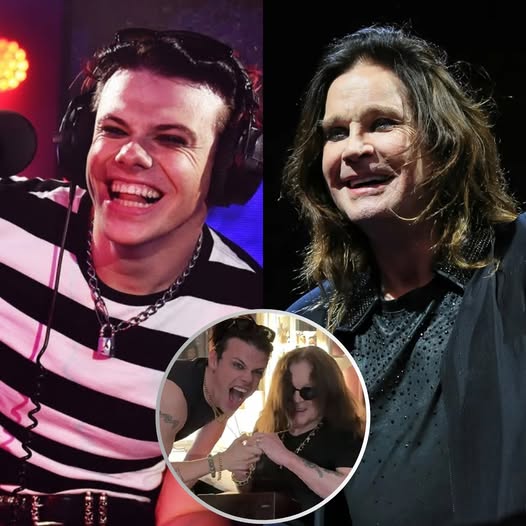
When grief hits, it often strips away the persona and reveals the human being underneath. That’s exactly what happened when Yungblud broke down while speaking about losing Ozzy Osbourne, the legendary figure he described as his “real-life Batman.”
It wasn’t just a tribute. It was a moment of raw vulnerability—one artist mourning not only an icon, but a mentor, a guide, and a symbol of fearless individuality. For fans watching, it became clear that this loss went far deeper than music. It was personal.
And in that moment, a new layer of Yungblud’s journey came into focus—one shaped not only by rebellion and energy, but by connection, influence, and profound loss.
To understand why Ozzy Osbourne meant so much to Yungblud, you have to look beyond the surface of rock stardom. Their connection wasn’t just about shared genre or mutual admiration—it was rooted in authenticity.
Ozzy Osbourne built his legacy on being unapologetically himself. From his early days redefining heavy metal to his larger-than-life persona that blurred the lines between chaos and charisma, he represented something rare: freedom without compromise.
Yungblud, in many ways, carries that same spirit.
From the beginning of his career, he has challenged expectations—musically, visually, and emotionally. Like Ozzy before him, he has never been afraid to stand outside the norm, to question authority, or to speak openly about identity and mental health.
It’s no surprise, then, that Yungblud saw Ozzy not just as a legend, but as a guiding force.
Calling him a “real-life Batman” wasn’t just poetic—it was symbolic. Batman represents resilience, strength in darkness, and the ability to turn pain into purpose. For Yungblud, Ozzy embodied all of that.
In interviews and behind-the-scenes moments over the years, Yungblud has often spoken about how much Ozzy meant to him—not just as an influence, but as someone who offered genuine support.
In an industry that can often feel isolating, especially for young artists navigating fame, having a figure like Ozzy Osbourne in your corner is rare. He wasn’t just a distant icon. He was present, encouraging, and understanding.
For Yungblud, who built his identity on pushing boundaries and challenging societal norms, Ozzy’s acceptance carried enormous weight. It was validation from someone who had already walked that path—and survived it.
That kind of mentorship doesn’t just shape a career. It shapes a person.
When Yungblud spoke about Ozzy’s passing, his composure faltered. The confident, high-energy performer that fans are used to seeing gave way to someone grieving deeply.
His voice cracked. His words slowed. And for a moment, the spotlight felt less like a stage and more like a confessional.
Calling Ozzy his “real-life Batman” captured the depth of his admiration, but it also revealed something else: loss of a hero.
For many people, losing a public figure is about losing an icon. But for Yungblud, it was losing someone who had been part of his personal journey—someone who had helped him navigate both the highs and lows of fame.
That kind of loss leaves a mark.
To understand the weight of that loss, it’s important to recognize what Ozzy Osbourne represents—not just to Yungblud, but to music as a whole.
Often referred to as the “Prince of Darkness,” Ozzy’s influence stretches across decades. As the frontman of Black Sabbath and later as a solo artist, he helped define the sound and attitude of heavy metal.
But his impact wasn’t limited to music.
Ozzy became a cultural figure—someone who embodied rebellion, unpredictability, and raw authenticity. He was flawed, outspoken, and undeniably human. And that’s exactly why so many people connected with him.
For artists like Yungblud, Ozzy wasn’t just part of history—he was proof that you could be yourself, no matter how unconventional that self might be.
One of the most powerful aspects of Yungblud’s emotional breakdown was its honesty. In a world where celebrities are often expected to maintain composure, showing vulnerability can feel risky.
But Yungblud has never been one to hide behind a polished image.
By openly grieving Ozzy’s loss, he reminded fans that emotions don’t disappear just because someone is in the spotlight. If anything, they become more complicated.
Grief is universal—but experiencing it in front of millions adds another layer of pressure.
Yungblud didn’t try to mask that reality. Instead, he embraced it, allowing fans to see not just the performer, but the person behind the music.
There’s another dimension to this story—one that speaks to legacy.
As one generation of artists passes on, another steps forward. And in many ways, Yungblud represents the continuation of what Ozzy Osbourne stood for.
Not in sound alone, but in spirit.
The refusal to conform.
The courage to be different.
The willingness to speak truth, even when it’s uncomfortable.
These are the qualities that defined Ozzy’s career—and they are the same qualities that drive Yungblud today.
In calling Ozzy his “real-life Batman,” Yungblud wasn’t just expressing admiration. He was acknowledging the role Ozzy played in shaping who he has become.
Now, that responsibility continues.
Yungblud’s emotional tribute didn’t just resonate with him—it resonated with fans around the world.
Social media quickly filled with messages of support, not only for Yungblud, but also in remembrance of Ozzy Osbourne. For many, it felt like a collective moment of grief—a chance to reflect on the music and memories that defined their own lives.
Fans appreciated Yungblud’s honesty. In his vulnerability, they saw their own emotions reflected.
It’s moments like these that remind us of the unique connection between artists and their audience. Music isn’t just entertainment—it’s a shared experience, a language that connects people across generations.
Throughout his career, Yungblud has often spoken about using pain as fuel for creativity. His music explores themes of identity, mental health, and resilience—all rooted in personal experience.
This loss may become another chapter in that journey.
While grief can be overwhelming, it can also inspire reflection, growth, and expression. For an artist like Yungblud, those emotions often find their way into his work.
Whether through new music, performances, or public conversations, Ozzy’s influence will likely continue to shape Yungblud’s path.
Not as a shadow, but as a source of strength.
One of the most poignant aspects of this story is the way it humanizes both Yungblud and Ozzy Osbourne.
We often view legends as untouchable, larger than life. But behind every icon is a person—someone who forms connections, offers guidance, and leaves a lasting impact on those around them.
Ozzy wasn’t just a rock star to Yungblud. He was a mentor, a symbol, and, in his words, a hero.
And Yungblud, in his moment of grief, reminded us that even heroes can be lost—and that their absence is deeply felt.
Yungblud’s emotional tribute to Ozzy Osbourne is more than a headline—it’s a powerful reminder of the connections that define us.
In calling Ozzy his “real-life Batman,” Yungblud captured something that goes beyond music: the idea that certain people enter our lives and change us forever.
Ozzy Osbourne’s legacy will continue to live on—not just in his songs, but in the artists he inspired, the boundaries he broke, and the lives he touched.
For Yungblud, that legacy is personal.
And as he moves forward, carrying both the influence and the memory of his hero, one thing is certain:
The spirit of Ozzy Osbourne isn’t gone.
It echoes in every note, every performance, and every fearless step taken by those he inspired.
Including the young artist who once called him Batman.