 111
111 2
2 3
3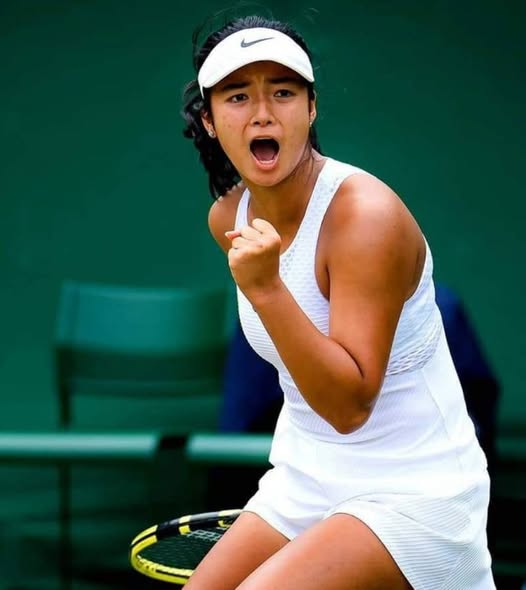
The tennis world is reeling from a sudden strategic pivot by rising Filipino star Alex Eala. Just days after a crushing defeat to Elise Mertens at the Madrid Open, Eala has officially withdrawn from her scheduled WTA 125 tournament. This decisive move signals a complete overhaul of her pre-French Open strategy, redirecting her focus entirely to the Florence ITF WTA 125. For fans and analysts alike, this is not merely a schedule change; it is a high-stakes gamble designed to salvage her clay-court form before the biggest stage of the year.
This article dissects the implications of Eala’s withdrawal, the psychological impact of her Madrid exit, and why the Florence tournament has emerged as the singular most critical event for her 2026 Grand Slam aspirations.
To understand the gravity of Eala’s withdrawal, one must first examine the catalyst: the Madrid Open. As one of the premier WTA 1000 clay-court events, Madrid is a litmus test for players aiming to compete at Roland Garros. For Eala, the tournament was intended to be a showcase of her growing prowess on the dirt. Instead, it became a stark reminder of the gap between her current form and the world’s elite.
Her match against Elise Mertens did not just end in a loss; it ended in a heavy defeat. Mertens, a seasoned campaigner known for her relentless consistency and powerful groundstrokes, dismantled Eala’s game plan with surgical precision. The statistics from the match paint a grim picture: Eala struggled with unforced errors, failed to convert break points, and appeared physically and mentally fatigued by the third set.
“In professional tennis, confidence is the currency of victory. When you lose heavily, that currency is devalued instantly.”
The heavy nature of the loss likely triggered a reassessment of Eala’s immediate schedule. Continuing to a WTA 125 event immediately after such a demoralizing performance could have been disastrous. It risks compounding the mental toll, potentially leading to a loss of form that could linger into the French Open. By withdrawing, Eala and her team made a bold, calculated decision to hit the reset button. This is not an admission of defeat but a strategic retreat to regroup, recalibrate, and rebuild before the next challenge.
With the Madrid Open chapter closed in disappointment, Eala’s attention has shifted exclusively to the Florence ITF WTA 125. This tournament, situated on the clay courts of Italy, offers a different environment and a more manageable competitive landscape.
While WTA 125 events are significant, the ITF circuit often provides a more controlled environment for players to fine-tune their games. The pace of play, the quality of opposition, and the overall pressure can be slightly less intense than a major WTA 125, allowing a player like Eala to focus on specific tactical adjustments without the immediate threat of a top-10 upset looming over every match.
The clay courts in Florence are renowned for their unique characteristics. They are slower and higher-bouncing than the hard courts Eala often favors, which can be a double-edged sword. However, for a player looking to build rhythm for the French Open, the clay in Florence is the perfect training ground. It allows Eala to:
By choosing Florence, Eala is signaling that she prioritizes quality preparation over quantity of matches. She is not looking to burnish her win-loss record with easy victories; she is looking to solve the problems exposed in Madrid.
In the high-pressure world of professional tennis, the decision to withdraw is often scrutinized heavily. Critics may view it as a lack of commitment or a sign of weakness. However, for an elite athlete like Eala, this move demonstrates a sophisticated understanding of mental health and performance psychology.
The danger of playing a tournament immediately after a heavy defeat is the risk of a downward spiral. A player who is already bruised emotionally may carry that frustration onto the next court, leading to more errors, more frustration, and a deeper loss of confidence. By withdrawing, Eala breaks this cycle. She protects her mental state, ensuring that she does not enter the Florence tournament with a “chase the win” desperation that often leads to poor decision-making.
Withdrawal buys time. It allows Eala to step back, analyze the footage from Madrid, and work with her coaching staff on specific technical adjustments. It provides the mental space to process the loss of the Madrid Open without the immediate pressure of another match. This period of reflection is crucial for translating the lessons of a bad day into the strengths of the next.
Rumors have swirled regarding potential friction between Eala and the Madrid Open organizers. While no official statement has confirmed specific grievances, the heavy defeat and the subsequent withdrawal have led to speculation that Eala may be annoyed with the tournament’s conditions, scheduling, or support systems. Whether these feelings are justified or not, the withdrawal serves as a clear message: Eala’s team is prioritizing her well-being above all else. If the environment in Madrid was not conducive to her success, she is choosing to remove herself from that ecosystem entirely.
As the tennis community awaits Eala’s return at the Florence ITF WTA 125, expectations are high. This tournament will serve as the barometer for her French Open readiness.
The field in Florence, while not as stacked as the Madrid Open, will still feature talented clay-court specialists. Eala will face opponents who understand the nuances of the surface and will be eager to challenge a rising star. This mix of challenge and manageability is exactly what she needs.
“In the world of tennis, the best players are not those who never lose, but those who know how to lose and come back stronger.”
The timeline for the French Open is unforgiving. With the tournament beginning in late May, every week counts. Eala’s withdrawal from the WTA 125 and her pivot to Florence is a calculated move to ensure she arrives in Paris in peak condition.
If Eala had played the full WTA 125 schedule, she might have arrived in Paris with a backlog of fatigue or, worse, a mindset still stuck in the aftermath of her Madrid loss. By focusing on Florence, she aligns her peak performance window with the Grand Slam. The tournament serves as a final dress rehearsal, a chance to test her game in a competitive but controlled environment.
The stakes for Eala in 2026 are higher than ever. As a Filipino star with global ambitions, every performance is scrutinized. A strong showing in Florence could propel her into the top rankings, securing a favorable draw at the French Open. Conversely, a poor performance could jeopardize her seeding and set the stage for a difficult opening round.
Alex Eala withdrew from the WTA 125 to regroup after a heavy defeat at the Madrid Open. Her team decided that continuing the immediate schedule would be detrimental to her mental and physical preparation for the French Open. The withdrawal allows her to focus on specific tactical adjustments and rebuild her confidence.
There is no official report of a physical injury. The withdrawal appears to be a strategic decision based on her performance in Madrid and the need to recalibrate her game before the French Open.
The Florence ITF WTA 125 is critical because it offers a more controlled environment for Eala to fine-tune her clay-court game. It serves as a final test before the French Open, allowing her to rebuild confidence and test new strategies without the intense pressure of a higher-tier WTA event.
While withdrawing from a tournament may result in a temporary dip in ranking points if she does not defend points from a previous year, the long-term goal is to maximize her performance at the French Open. A strong showing in Florence and a deep run at Roland Garros will have a far greater positive impact on her ranking than a mediocre performance at the WTA 125.
Fans can expect a more focused and resilient Alex Eala. The lessons learned from her Madrid defeat and the subsequent strategic pivot to Florence should result in a more mature and tactically sound performance at the French Open. She is likely to be more patient, more aggressive on key points, and better prepared for the unique challenges of the clay courts in Paris.
Eala’s decision sends a powerful message to the Philippine tennis community and aspiring athletes worldwide. It underscores the importance of mental resilience and strategic adaptability. In a sport where the margin for error is razor-thin, the ability to make tough decisions in the face of adversity is a hallmark of greatness.
Her withdrawal is not a retreat; it is a strategic maneuver. It demonstrates that success is not just about winning every match but about knowing when to step back, reassess, and prepare for the ultimate challenge. For Eala, the path to the French Open is paved with difficult choices, and her decision to prioritize the Florence ITF WTA 125 is a testament to her commitment to excellence.
Alex Eala’s withdrawal from the WTA 125 following her Madrid Open exit is a defining moment in her 2026 season. It is a move that prioritizes long-term success over short-term gains, mental health over immediate competition, and strategic preparation over blind persistence.
By shifting her focus to the Florence ITF WTA 125, Eala is taking control of her narrative. She is refusing to let a single bad match define her season. Instead, she is using it as a catalyst for growth, a learning opportunity that will ultimately make her a stronger, more formidable competitor at the French Open.
The tennis world watches with bated breath. Will Eala’s bold strategy pay off? Can she translate the lessons of Madrid into a triumphant run in Florence and beyond? The answers will soon be revealed on the clay courts of Italy. What is certain is that Alex Eala is playing the long game, and her journey to Roland Garros is far from over. In fact, it is just beginning.
The stakes are high, the pressure is immense, but the resolve is unwavering. For Alex Eala, the road to glory is paved with resilience, and she is ready to walk it.