 111
111 2
2 3
3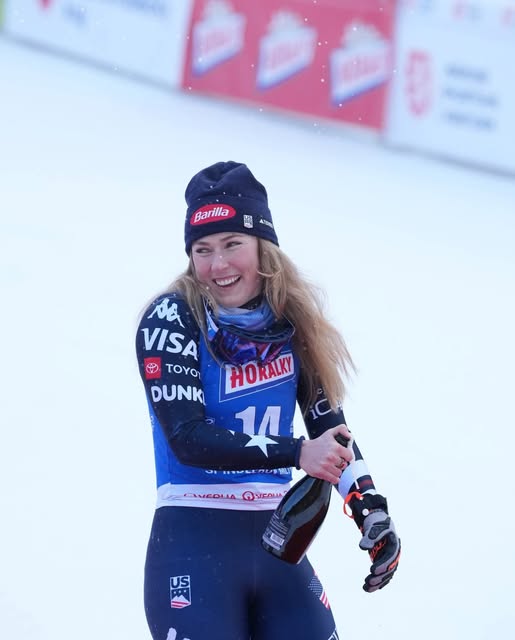
When Mikaela Shiffrin clinched the Overall World Cup Crystal Globe, it wasn’t just another trophy added to an already legendary career—it was a statement of sustained dominance in one of the most demanding sports on earth.
Capping off a sensational 2025–26 season, Shiffrin once again proved why she is widely regarded as one of the greatest alpine skiers in history. In a sport where fractions of a second decide outcomes, her consistency across disciplines separated her from an elite field of competitors.
This victory wasn’t built in a single race. It was built across an entire season of precision, pressure, and psychological mastery.
The Overall World Cup Crystal Globe is awarded to the skier who accumulates the most points across all Alpine Ski World Cup events in a season.
Winning it requires not just talent—but endurance, adaptability, and elite mental control over an entire season.
Shiffrin’s path to the Crystal Globe was defined by:
While other athletes experienced peaks and dips, Shiffrin maintained a remarkably stable performance curve throughout the season.
In World Cup skiing, consistency beats occasional brilliance—and Shiffrin mastered both.
Shiffrin’s ability to finish near the top in nearly every race is what separates her from competitors.
Even when she is not winning, she is scoring critical points—race after race.
Her slalom technique remains unmatched:
This precision translates into milliseconds that accumulate into championship-winning margins.
Elite skiing is mentally exhausting. Shiffrin’s ability to reset after setbacks is a defining trait.
She does not carry one race into the next—each performance is isolated and reset.
While many athletes struggle under season-long pressure, Shiffrin thrives in it.
The Crystal Globe race is not decided in one moment—it is a months-long psychological battle, and she consistently stays composed.
Few skiers compete at a top level across multiple disciplines.
Shiffrin’s versatility allows her to:
With years of World Cup experience, she understands:
This decision-making intelligence is often the hidden factor behind season-long success.
Shiffrin’s dominance is not about winning every race—it’s about controlling the season narrative.
She doesn’t need streaks of victories to lead. She leads through sustained excellence.
While exact race-by-race breakdowns vary, World Cup champions typically:
Shiffrin’s ability to remain at the top across this workload highlights extraordinary physical and mental durability.
It is awarded to the skier with the highest total points across all World Cup races in a season.
She has won multiple overall titles, further cementing her legacy as one of the sport’s all-time greats.
Because it reflects:
They represent different challenges:
Both are extremely difficult in different ways.
A combination of:
Shiffrin’s season is not just a sports story—it is a performance blueprint.
Sustained output creates long-term success.
Being strong across multiple “disciplines” increases resilience.
Each project or cycle should be treated independently.
Smart decisions outperform reckless aggression.
Success is built across systems, not moments.
In an era of unpredictable competition, Shiffrin’s Crystal Globe win represents:
It is a reminder that true greatness is not momentary—it is sustained.
Mikaela Shiffrin’s 2025–26 Crystal Globe victory is more than a title—it is a demonstration of elite control over chaos.
In a sport defined by risk, variation, and pressure, she delivered something rare:
Predictable excellence over an unpredictable season.
And that is what makes her dominance so powerful.
Not just winning races—but owning the entire season narrative from start to finish.
Because in alpine skiing, as in life,
the greatest champions are not defined by isolated victories—but by sustained mastery when it matters most.