Few artists in modern British music provoke as much energy, debate, and devotion as Yungblud. Every performance feels less like a concert and more like a controlled explosion—part theatre, part rebellion, and part emotional release. His recent show, widely described as “an epic display of showmanship from the face of British rock,” reinforces exactly why he has become one of the most talked-about live performers of his generation.
This is not just a review of a concert. It is an examination of a cultural moment—one where chaos, identity, and rock revival collide in front of thousands of screaming fans who do not just watch Yungblud perform; they experience him.
A New Era of British Rock Energy
British rock has always evolved through disruption. From punk’s raw rebellion to Britpop’s swagger and indie rock’s emotional introspection, each era has had a defining voice. Today, Yungblud stands at the center of that conversation.
What makes his rise so striking is not just his sound, but his refusal to be confined by genre. His music blends punk attitude, pop accessibility, and alternative rock intensity, creating a hybrid style that feels tailor-made for a generation raised on streaming playlists rather than rigid categories.
From the moment he steps on stage, it is clear that this is not a traditional rock performance. It is a statement: music is meant to be felt, not just heard.
A Stage Presence Built on Chaos and Control
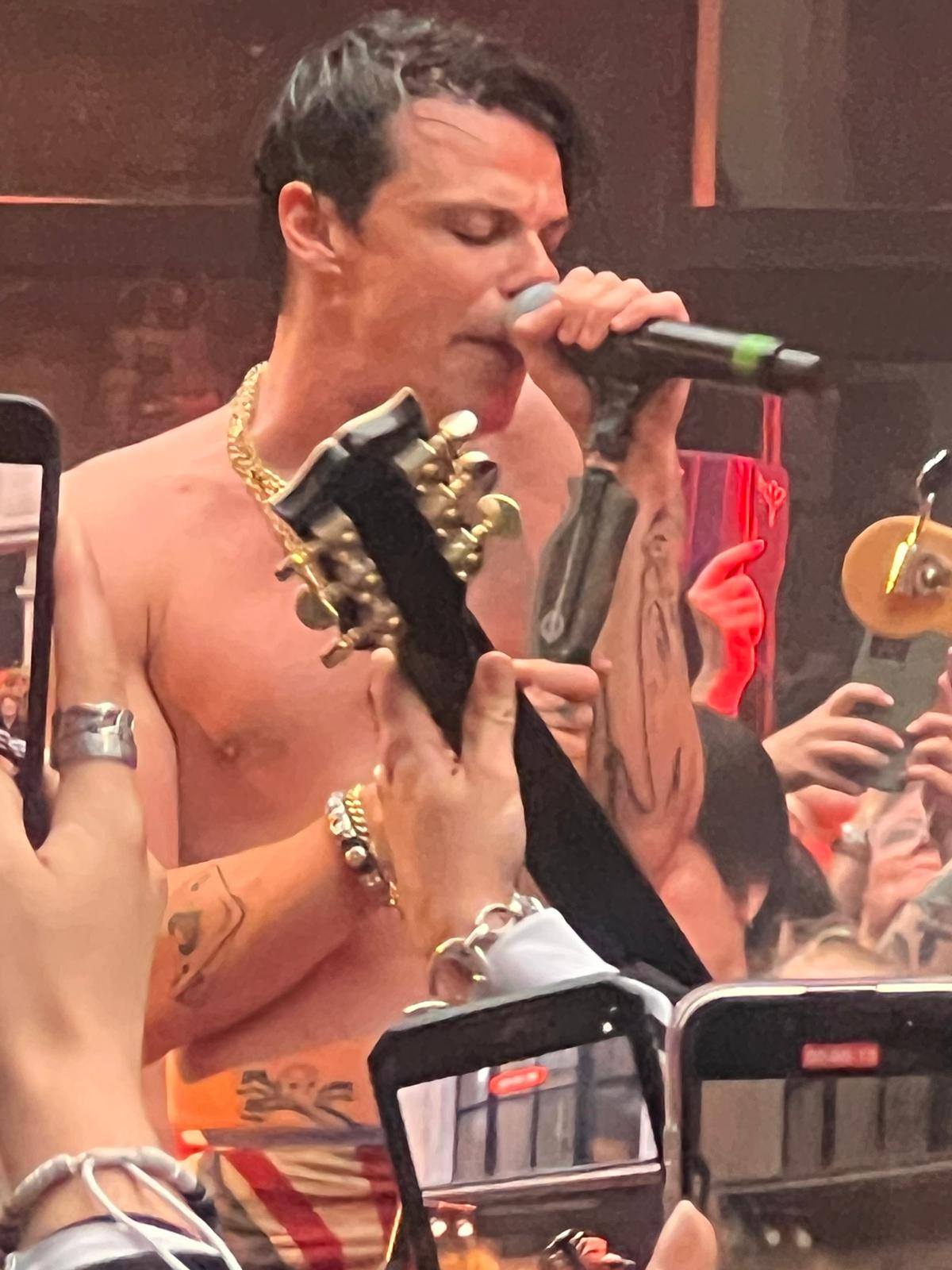
What defines Yungblud’s live show is the balance between chaos and precision. On one hand, there is wild movement, unpredictable interaction with the crowd, and raw emotional outbursts. On the other, there is complete command of timing, pacing, and audience engagement.
He does not simply sing songs—he performs them like scenes in a play where every emotion is amplified. One moment he is screaming into the microphone with punk aggression; the next, he is addressing the crowd with vulnerable honesty that silences the room.
This duality is what makes the experience so compelling. It is not polished perfection. It is controlled imperfection—intentional, expressive, and deeply human.
A Crowd That Becomes Part of the Performance
One of the most remarkable aspects of Yungblud’s concerts is the relationship between artist and audience. The barrier between stage and crowd feels almost nonexistent. Fans are not passive spectators; they are active participants in the energy exchange.
Every lyric is shouted back with intensity. Every pause is filled with anticipation. Every emotional moment is shared collectively, as if the entire venue is breathing in sync.
This sense of unity is not accidental. Yungblud has built his brand around inclusion—creating a space where outsiders feel like insiders. The crowd reflects that philosophy. It is diverse, expressive, and unafraid to be exactly who they are.
In that environment, the concert becomes more than entertainment. It becomes liberation.
Vocal Performance: Raw, Imperfect, and Powerful
Technically, Yungblud is not defined by flawless vocal precision. Instead, his strength lies in emotional authenticity. His voice cracks when it needs to. It rises aggressively in moments of intensity. It softens when vulnerability takes over.
That unpredictability is what gives his performance its edge. In an era where studio perfection is often expected, Yungblud leans into imperfection as a form of truth.
Songs that already carry emotional weight in recordings become even more intense live. The imperfections are not flaws—they are expressions of honesty. And the audience responds to that honesty with overwhelming energy.
The Setlist as a Journey Through Identity
Rather than simply delivering a collection of hits, Yungblud structures his setlist like an emotional arc. The performance moves through stages—rebellion, vulnerability, anger, joy, and release.
Early sections often ignite the crowd with high-energy tracks that set the tone. Midway through, the energy shifts into introspective moments where themes of mental health, identity, and belonging come forward. By the end, the show erupts into collective celebration.
This structure is intentional. It mirrors the emotional complexity of his audience—many of whom connect to his music because it reflects their own struggles and triumphs.
By the time the final song ends, the audience is not just entertained. They are emotionally spent in the best possible way.
Visuals, Lighting, and Theatrical Edge
The production design of Yungblud’s shows enhances rather than overshadows the performance. Lighting shifts dramatically with mood changes—flashing reds during high-intensity moments, soft tones during emotional breakdowns, and explosive bursts during climactic sections.
The stage design often feels industrial yet artistic, reflecting the punk roots of the performance. There is an intentional rawness to the setup, avoiding overly polished aesthetics in favor of something that feels lived-in and real.
This visual identity supports the narrative of the show: rebellion is not polished, and neither is self-expression.
Emotional Honesty at the Core
Beyond the energy and spectacle, what truly sets Yungblud apart is emotional honesty. He speaks openly to the audience about identity, mental health, self-worth, and the pressure of modern life.
These moments slow the pace of the show, creating space for reflection. In these pauses, the audience is reminded that beneath the noise and chaos lies a deeper message: it is okay to feel, to struggle, and to be different.
This emotional transparency transforms the concert into something more meaningful than entertainment. It becomes a shared emotional release.
A Performer Who Reflects His Generation
Yungblud’s rise is closely tied to the generation that embraces him. His audience is largely young, diverse, and digitally connected—but also emotionally aware and open about mental health.
In many ways, he acts as a mirror for them. His music and performances reflect their frustrations, hopes, and contradictions. That is why the connection feels so personal.
He does not present himself as above his audience. Instead, he positions himself within it—as someone who feels the same intensity and confusion, but channels it through music.
This relatability is a key reason his live performances feel so powerful.
The Meaning of Showmanship Today
Calling Yungblud a showman is accurate, but it requires context. His showmanship is not about spectacle alone—it is about emotional connection.
True showmanship, in his case, is not just lighting, choreography, or stage effects. It is the ability to hold thousands of people in a shared emotional space and make them feel understood.
That is why the phrase “an epic display of showmanship from the face of British rock” feels appropriate. It captures both the theatrical intensity and the cultural significance of what he represents.
Criticism and Contrast
Like many boundary-pushing artists, Yungblud is not universally accepted. Critics sometimes question whether his style leans too heavily on performance energy rather than musical refinement. Others debate whether his genre-blending dilutes traditional rock identity.
However, these criticisms often miss the point. Yungblud is not attempting to preserve old definitions of rock—he is reshaping them. His artistry is less about fitting into tradition and more about reflecting current emotional realities.
In that sense, the debate itself becomes part of his impact.
The Final Impression: Controlled Fire
As the show comes to an end, what remains is not exhaustion but clarity. The audience leaves with ringing ears, emotional release, and a sense of connection that extends beyond the venue.
Yungblud’s performance is not designed to be consumed and forgotten. It is designed to be felt and remembered.
He leaves the stage not as a distant rock star, but as a participant in something shared—a temporary community built on sound, emotion, and honesty.
Conclusion: The Face of a Changing Rock Era
In a music landscape often dominated by digital precision and genre fragmentation, Yungblud stands as a reminder that rock music is still alive—and still evolving.
His live performance, described as “an epic display of showmanship from the face of British rock,” is more than praise. It is recognition of an artist who has found a way to merge chaos with meaning, energy with vulnerability, and performance with truth.
Whether one fully embraces his style or not, his impact is undeniable. He represents a new chapter in British rock—one defined not by perfection, but by authenticity.
And in that space between noise and emotion, Yungblud continues to thrive as one of the most compelling performers of his generation.