When emotions run deep in music, words often become more than just expressions—they become windows into the soul. That is exactly what happened when Yungblud opened up about the loss of rock icon Ozzy Osbourne, describing him in a deeply personal and unexpected way: “He was like Batman to me.”
The statement instantly resonated with fans around the world, not just because of its emotional weight, but because it captured something larger than admiration. It revealed a generational bond between two artists—one a legendary pioneer of heavy metal, the other a modern voice of rebellion—connected through chaos, vulnerability, and the unbreakable spirit of rock music.
This is not just a story about grief. It is a story about influence, identity, and what it means to lose a hero who helped shape your artistic world.
A Hero Beyond Music
For millions, Ozzy Osbourne is known as the “Prince of Darkness,” a founding force behind heavy metal and the iconic frontman of Black Sabbath. His voice defined a genre. His persona shaped an era. And his legacy became larger than life.
But for Yungblud, Ozzy was more than a rock legend. He was a symbol.
By comparing him to Batman, Yungblud wasn’t referring to superhero fantasy in a literal sense. Instead, he was expressing something emotional and symbolic: Ozzy represented strength through chaos, survival through darkness, and identity forged in imperfection.
Batman, like Ozzy, is not perfect. He is not polished. He is not untouched by pain. Yet he stands tall in the shadows, transforming struggle into purpose. That is the image Yungblud carried in his heart.
Ozzy Osbourne was that figure in real life—a man who turned personal battles into music that defined generations.
The Emotional Impact on a New Generation of Rock
Yungblud has always positioned himself as a voice for the outsiders, the misunderstood, and the emotionally expressive. His music blends punk energy with raw vulnerability, echoing themes that Ozzy Osbourne helped pioneer decades earlier.
For Yungblud and many artists of his generation, Ozzy was not just a musician—they were studying him like a blueprint for survival in the music industry.
From the heavy riffs of Black Sabbath to Ozzy’s solo career, his influence stretched far beyond sound. He represented freedom. Freedom to be weird. Freedom to be loud. Freedom to be broken and still be celebrated.
When someone like Yungblud loses that figure, it is not simply the passing of a celebrity. It feels like the loss of a guiding force in their artistic identity.
“He Was Like Batman to Me” — A Metaphor of Strength and Darkness
The phrase “He was like Batman to me” carries layers of meaning.
Batman is a character who exists between light and darkness. He is not defined by perfection but by persistence. He carries trauma, yet channels it into purpose. He is feared by villains but misunderstood by society.
In many ways, Ozzy Osbourne’s life mirrors this symbolism. He lived through fame, addiction, reinvention, criticism, and survival. Yet he remained authentic to himself throughout it all.
Yungblud’s comparison reflects admiration, but also emotional dependency—not in a fragile sense, but in a creative one. Ozzy represented what it meant to endure the storm and still stand on stage.
For a young artist navigating fame, identity, and emotional expression, that example becomes life-changing.
The Legacy of Ozzy Osbourne in Modern Music
The influence of Ozzy Osbourne extends far beyond heavy metal.
He shaped stage performance, vocal expression, and even the idea of what a rock star could be. His presence with Black Sabbath created a sonic identity that inspired countless genres—from grunge to alternative rock to modern punk.
More importantly, he redefined vulnerability in rock music. Beneath the dark imagery and powerful vocals was a man who openly battled personal struggles, making his music feel human rather than mythological.
That honesty is what continues to resonate with artists like Yungblud today.
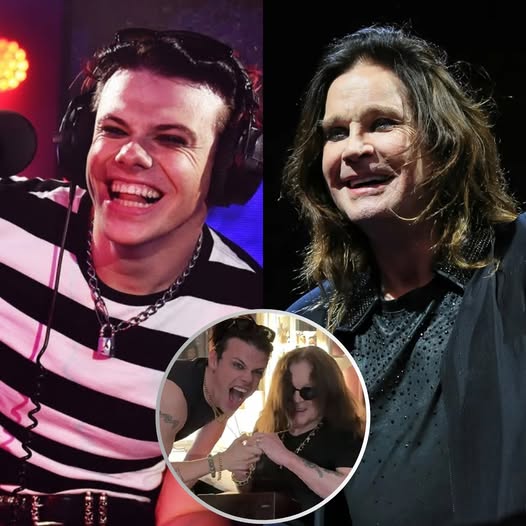
In many ways, Ozzy didn’t just create music—he created permission. Permission for artists to be flawed, emotional, and real.
Yungblud’s Artistic Connection to Ozzy’s Spirit
Yungblud’s music thrives on emotional openness and rebellion against conformity. Songs that explore mental health, identity, and emotional pain echo the same fearless honesty Ozzy embodied in his own way.
Both artists share a common thread: they refuse to be contained.
On stage, Yungblud’s chaotic energy, dramatic performance style, and emotional directness mirror the rebellious spirit that Ozzy became famous for decades earlier. It is not imitation—it is evolution.
Ozzy laid the foundation. Yungblud is building a new structure on top of it.
This generational connection explains why the loss feels so personal for him. It is not just about admiration—it is about continuity. A torch passed from one era of rock to another.
Grief in the Music World
When musicians lose their heroes, the grief often becomes public, but deeply personal.
For Yungblud, expressing this loss through the Batman metaphor transforms grief into storytelling. It allows fans to understand not just what was lost, but what Ozzy represented emotionally.
Grief in music is unique because influence never truly disappears. It continues through sound, lyrics, and performance. Every stage moment, every distorted guitar riff, every rebellious lyric carries fragments of those who came before.
Ozzy Osbourne’s influence will continue to echo in modern rock, just as it shaped its foundation.
The Human Side of Legends
What makes this moment especially powerful is the reminder that legends are still human beings.
Behind the persona of Ozzy Osbourne was a man who lived through extremes—success, chaos, reinvention, and endurance. Yet to younger artists like Yungblud, he was not an unreachable icon. He was someone relatable in his imperfection.
That relatability is what made him “Batman” in Yungblud’s eyes—not because he was fictional, but because he symbolized survival against odds.
It is a reminder that influence is not always about perfection. Sometimes it is about persistence.
A Bridge Between Generations
One of the most meaningful aspects of Yungblud’s tribute is how it connects two generations of rock fans.
Ozzy Osbourne represents the foundation—the raw, unfiltered birth of heavy metal. Yungblud represents a modern interpretation of rebellion—emotionally expressive, genre-blending, and socially aware.
The emotional bridge between them shows how music evolves without losing its soul.
Even as styles change, the essence remains: honesty, rebellion, and emotional release.
Ozzy built the language. Yungblud is still speaking it in a new dialect.
Why the “Batman” Comparison Matters
Calling Ozzy Osbourne “Batman” is more than poetic language—it is a reflection of how deeply music shapes identity.
Batman is not admired for being flawless. He is admired for enduring darkness and still choosing to fight.
Similarly, Ozzy’s life story was not one of perfection but of survival and reinvention. That is why his influence remains so powerful. It is not built on fantasy—it is built on reality.
For Yungblud, that reality was formative. It helped shape not just his music, but his understanding of what it means to be an artist in a chaotic world.
Conclusion: The Legacy That Never Disappears
The passing of influence from Ozzy Osbourne to Yungblud is not a clean line—it is a living echo.
When Yungblud says, “He was like Batman to me,” he captures something profound: the idea that heroes do not always wear capes or exist in myths. Sometimes they exist in distorted guitar riffs, raspy vocals, and a life lived unapologetically in public view.
Ozzy Osbourne’s legacy is not confined to history. It lives in every artist he inspired, every fan he moved, and every stage that still carries his energy.
And in artists like Yungblud, that legacy continues—not as imitation, but as evolution.
Because in music, as in myth, legends never truly disappear. They become something else.
They become part of the next voice that dares to speak.