 111
111 2
2 3
3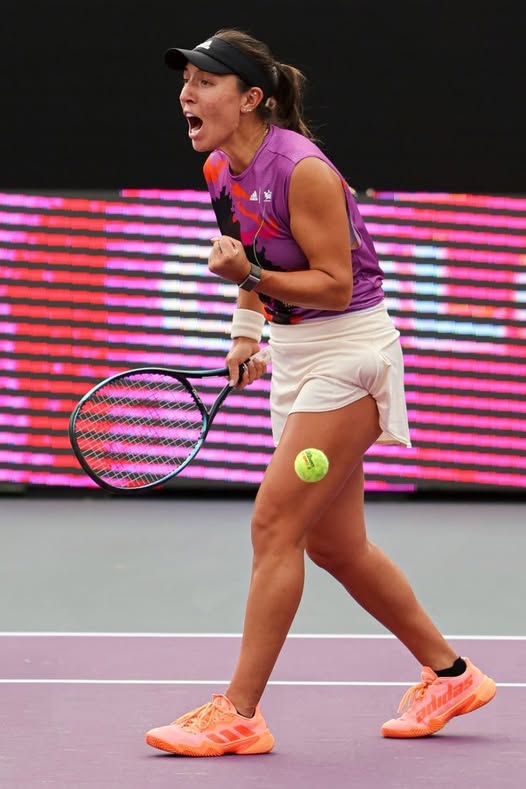
Jessica Pegula is currently riding a wave of momentum that has tennis analysts buzzing. After a dominant performance at the Charleston Open on the green clay of the United States, the American star now faces her most daunting test yet: the high-altitude, red clay of the Mutua Madrid Open.
The question on everyone’s mind is simple yet critical: Can Pegula channel the specific form and confidence from Charleston to conquer the unique challenges of Madrid?
The short answer is yes, but with a caveat. The transition from the slower, higher-bouncing green clay of Charleston to the faster, lower-bouncing red clay of Madrid requires a tactical fine-tuning that Pegula has already begun to master. Her recent victory over Katie Boulter in Madrid suggests that the “Charleston momentum” is not just a memory, but a foundation she is actively building upon.
At the Charleston Open, Pegula displayed a level of clay-court mastery that many thought was years away. Her success was built on three pillars that are directly transferable to Madrid:
These elements formed the “Charleston Blueprint,” a formula that saw her dismantle top competition and secure a title. The confidence gained from this victory is a tangible asset as she steps onto the Madrid courts.
While the surface is technically “clay” in both locations, the Madrid Open presents a unique set of variables that differ significantly from Charleston:
To successfully channel her Charleston momentum into a Madrid title run, Pegula must make specific tactical adjustments:
The faster ball speed in Madrid means Pegula needs to prepare for her shots slightly earlier. Her heavy topspin that worked in Charleston might need to be hit with a slightly flatter trajectory to prevent the ball from sailing long in the thin air.
While patience was key in Charleston, Madrid rewards aggressive baseline play. Pegula must be willing to take control of points sooner, hitting through the court rather than waiting for the opponent to make an error. Her victory over Boulter demonstrated this shift; she didn’t just defend, she attacked.
The high altitude makes serves travel faster, but it also makes them harder to control. Pegula needs to focus on placement and variety rather than just power. A well-placed serve can set up easy points, which is crucial in a tournament where every game counts.
Beyond the tactics, the psychological component of “momentum” cannot be overstated. Winning in Charleston gave Pegula the belief that she can compete with and defeat the best clay-court players in the world. That belief is currency in the high-stakes environment of the Madrid Open.
Can Jessica Pegula channel her Charleston momentum to Madrid? Absolutely.
The foundation is there. Her recent performance against Katie Boulter in Madrid proved that she has already begun the necessary adjustments. She has the technical skills, the mental fortitude, and the confidence to succeed on the red clay of Spain.
While the transition is not seamless, Pegula has shown the adaptability to overcome the differences between the two surfaces. If she can maintain the aggressive baseline play and mental patience that defined her Charleston run, she is not just a contender for the title—she is the player to beat.
As the tournament progresses, all eyes will be on Jessica Pegula. Will she channel the magic of Charleston to secure a historic title in Madrid? The signs are promising. With her game firing on all cylinders and her confidence soaring, the American star is ready to make her mark on the red clay of Spain.