 111
111 2
2 3
3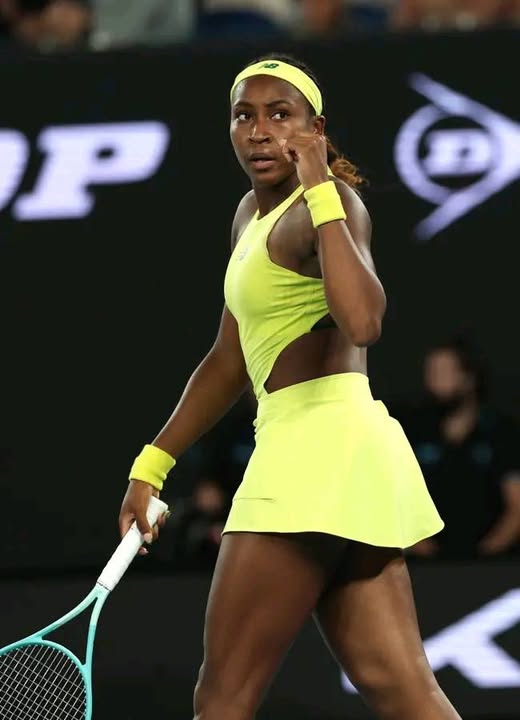
Coco Gauff, the youngest American woman to reach a Grand Slam final in over a decade, recently dropped a quote that resonates far beyond the tennis court. Describing the clay surface, she stated: “Clay Court Is Like That Nice Guy Who Treats You Well, But With Whom There’s No Chemistry.”
This analogy is not just a witty soundbite; it is a profound strategic insight into the mechanics of modern tennis. In a sport defined by surface specialization, Gauff’s comment highlights the complex relationship between a player’s natural style and the demands of specific court conditions. For coaches, analysts, and serious players, understanding this “lack of chemistry” is the key to unlocking performance potential and managing expectations during the grueling European clay season.
This article dissects Gauff’s metaphor, examines the statistical reality of her clay-court struggles, and explores the actionable strategies players must adopt to bridge the gap between potential and performance on red dirt.
To understand Gauff’s frustration, one must first understand the unique characteristics of the clay court. Often romanticized as the most “fair” surface, clay is indeed the “nice guy.” It is slower, bounces higher, and allows for more reaction time. It rewards patience, defense, and mental fortitude. Unlike the unforgiving, lightning-fast hard courts or the low-bouncing grass, clay treats players with a certain leniency.
However, Gauff’s quote cuts to the core of the issue: treatment does not equal compatibility.
In the world of dating, a “nice guy” may offer stability and kindness, but if the emotional spark is missing, the relationship fails. Similarly, clay offers a stable, predictable bounce that treats players well by slowing down the game. Yet, for a player like Gauff, whose game is built on explosive power, aggressive baseline striking, and rapid-fire footwork on hard courts, the surface feels foreign. The “chemistry” is absent because the surface demands a style of play that contradicts her natural instincts.
The lack of chemistry Gauff describes stems from fundamental physical differences:
This mismatch is not a flaw in Gauff’s talent; it is a structural incompatibility between her weaponized aggression and the surface’s defensive nature.
While the quote is poetic, the data provides the cold, hard truth. Gauff’s performance metrics on clay tell a story of a player who is capable but consistently underperforms relative to her hard-court dominance.
According to recent Grand Slam statistics:
These statistics validate Gauff’s analogy. The surface is “nice” in that it gives her more time, but that extra time does not translate to her success because her game is not built for the grind. The “chemistry” is missing, and the numbers prove it.
To further illustrate the point, consider Iga Świątek, the world number one and a clay-court specialist. For Świątek, the clay is a perfect match. Her heavy topspin, exceptional sliding ability, and mental toughness create a synergy with the surface that Gauff currently lacks. Świątek’s chemistry with clay is so potent that she has won the French Open multiple times, dominating the field.
Gauff’s struggle is not a failure of skill, but a failure of surface alignment. This is a crucial distinction for coaches and players to understand. You cannot force chemistry where none exists; you must adapt your strategy to work with the surface, not against it.
So, how does a player like Gauff, or an amateur looking to improve their clay game, address this “lack of chemistry”? The answer lies in strategic adaptation and tactical patience.
The first step is accepting the reality of the surface. Trying to hit winners from the baseline on clay from the first ball is a recipe for disaster. Players must learn to construct points, using depth and spin to move opponents around before looking for an opening.
Sliding is the great equalizer on clay. Without it, a player is constantly off-balance, leading to weak shots.
Hard-court players often rely on flat hitting. On clay, heavy topspin is essential to keep the ball in play and push opponents back.
Clay tennis is a mental marathon. The extended rallies test patience like no other surface.
To provide a comprehensive guide, let’s address the most common questions surrounding Gauff’s comment and clay-court dynamics.
Gauff’s game is built on speed, power, and aggressive shot-making, which are highly effective on hard courts. Clay slows down the ball and extends rallies, neutralizing her power and forcing her into a defensive, grinding style that doesn’t play to her strengths. The “no chemistry” stems from this fundamental mismatch in play style.
Yes, but it requires significant adaptation. Players like Novak Djokovic and Rafael Nadal (originally a clay specialist who adapted to all surfaces) have proven that versatility is possible. However, it demands a complete overhaul of footwork, shot selection, and mental approach. It is a steep learning curve that many players find difficult to master.
In tennis, “chemistry” refers to the synergy between a player’s natural strengths (e.g., serve speed, footwork style, shot selection) and the physical characteristics of the court (e.g., speed, bounce, friction). When a player’s style matches the surface, they feel “in sync,” leading to higher performance. When they don’t match, the player feels forced to play a game that doesn’t feel natural, leading to frustration and errors.
Amateurs should focus on three key areas: patience (not rushing points), spin (using topspin to control the ball), and footwork (learning to slide). Drills that simulate long rallies and emphasize consistency over power are essential. Additionally, mental training to handle the slower pace and longer points is crucial.
It is unlikely she will ever become a clay-court dominant like Świątek, as her natural game is so suited to hard courts. However, she can certainly improve her results by refining her defensive skills and learning to construct points more effectively. The goal is not to become a clay-court specialist, but to become a competent all-surface player who can compete at a high level regardless of the conditions.
In the professional tennis circuit, surface mastery is a business imperative. Grand Slam tournaments are the primary revenue generators for players, and each surface offers a unique revenue stream. A player who can only dominate on one surface limits their earning potential and legacy.
Gauff’s quote is a reminder that specialization has limits. While her hard-court dominance is lucrative, the inability to translate that success to clay leaves money on the table. For the business of tennis, this means:
Understanding the “chemistry” between player and surface is not just a matter of personal preference; it is a strategic calculation that impacts career longevity and financial success.
Coco Gauff’s analogy of the “nice guy with no chemistry” is a masterclass in self-awareness. It acknowledges that success is not just about talent or effort; it is about alignment. The clay court is not “bad”; it is simply not the right match for her current game.
For players, coaches, and fans, this perspective is liberating. It removes the stigma of “failing” on a surface and replaces it with a strategic understanding of fit. The path forward is not to force a relationship that doesn’t work, but to adapt, evolve, and find the right balance between natural talent and surface demands.
As the tennis season progresses, watch how Gauff and other top players navigate this challenge. Will they find a way to build chemistry? Or will they accept the surface for what it is and adapt their game accordingly? The answer lies not in the court, but in the player’s willingness to change.
In the end, tennis is a game of matches—both on the scoreboard and in the mind. And sometimes, the most important match is the one between a player and the surface beneath their feet.
Key Takeaways:
The journey to mastering clay is long, but for those willing to put in the work, the rewards are immense. Whether you are a professional like Gauff or an amateur looking to improve, remember: the right chemistry is out there. You just have to find it.