 111
111 2
2 3
3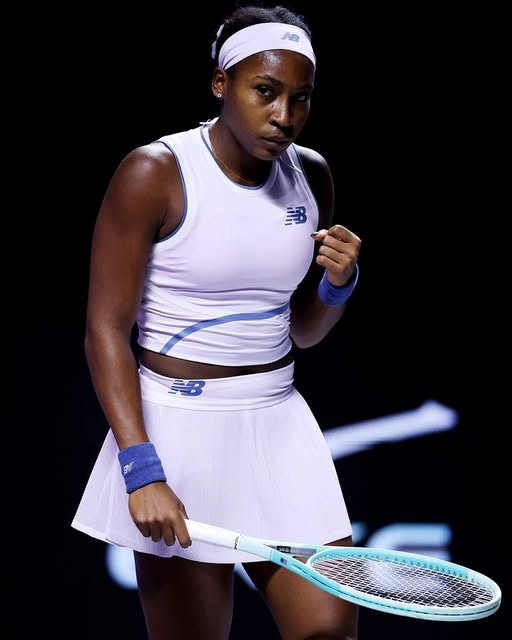
In professional tennis, victories are often measured in clean winners, dominant scorelines, and flawless execution. But every so often, a performance comes along that transcends statistics—one defined not by perfection, but by perseverance. That was exactly the case when Coco Gauff stepped onto the clay courts of the Madrid Open under far-from-ideal circumstances.
“I was just trying to finish.”
Those words, spoken after her hard-fought victory, captured the essence of a match that was less about tennis brilliance and more about sheer determination. Battling illness, fatigue, and the unforgiving demands of elite competition, Gauff dug deep to secure her place in the Round of 16—proving once again why she remains one of the most resilient competitors on the WTA Tour.
From the very first game, something felt different. Observers quickly noticed that Gauff wasn’t moving with her usual explosiveness. Her footwork—typically sharp and precise—seemed slightly off. The energy that usually defines her presence on court appeared subdued.
But what the crowd didn’t fully realize at the start was that Gauff was dealing with illness.
In a sport where margins are razor-thin, even the slightest physical discomfort can derail performance. For Gauff, this wasn’t a minor inconvenience. It was a genuine battle just to stay competitive, let alone win.
And yet, she refused to walk away.
Physical struggles are visible. Mental battles are not.
As rallies extended and points grew longer, Gauff’s challenge became just as psychological as it was physical. Every serve required focus. Every return demanded concentration. Every game tested her willpower.
Moments like these separate good players from great ones.
Rather than chasing perfection, Gauff adjusted her expectations. She simplified her game, focusing on staying in points and minimizing errors. It wasn’t flashy. It wasn’t dominant. But it was effective.
“I was just trying to finish,” she admitted later—a statement that reveals the mindset of an athlete prioritizing survival over style.
One of Gauff’s greatest strengths has always been her ability to adapt. On clay, where patience and endurance are essential, she leaned into a more controlled approach.
Instead of relying on high-intensity rallies, she picked her moments carefully. She extended points when necessary, but also looked for opportunities to shorten exchanges. Her serve, though not at full strength, became a tool of strategy rather than power.
This adaptability was crucial.
Against a healthy opponent, even a slight dip in performance can be exploited. But Gauff’s tactical awareness ensured she stayed within striking distance, keeping the match competitive even when her body was not cooperating.
Every match has a defining moment—a point where momentum shifts and belief takes over.
For Gauff, that moment came not from a spectacular winner, but from a sequence of resilience. After a grueling game filled with extended rallies, she held serve in a situation that could have easily slipped away.
It wasn’t just about the score. It was about belief.
Holding that game sent a message—not just to her opponent, but to herself: she was still in this fight.
From there, her confidence grew. Not because she suddenly felt better physically, but because she proved she could compete despite the odds.
The atmosphere at the Madrid Open played its role as well.
Fans, sensing the struggle unfolding before them, rallied behind Gauff. Applause grew louder after every hard-fought point. Encouragement echoed across the stadium.
In moments of physical fatigue, that support can make a difference.
While tennis is often described as an individual sport, it’s in matches like this that the connection between player and crowd becomes undeniable. Gauff fed off that energy, using it to push through moments when her body was asking her to stop.
When the final point was won, the reaction was not one of exuberant celebration. Instead, it was relief.
Gauff had done more than win a match. She had endured.
Advancing to the Round of 16 at a major tournament is always significant. But under these circumstances, it carried deeper meaning. It represented resilience, discipline, and mental toughness.
Matches like this don’t always show up in highlight reels. They don’t always produce viral moments. But they reveal the true character of a player.
At just 20 years old, Coco Gauff continues to evolve—not only as a player, but as a competitor.
Early in her career, she was known for her explosive athleticism and fearless shot-making. Those qualities remain, but they are now complemented by something equally important: composure.
Her performance in Madrid highlighted a level of maturity that goes beyond her years. Instead of panicking when faced with adversity, she adapted. She remained calm. She focused on what she could control.
This growth is what separates rising stars from future champions.
The WTA Tour is relentless.
Players travel across continents, adjusting to different surfaces, climates, and time zones. The physical and mental demands are immense. Illness, fatigue, and injuries are inevitable.
For Gauff, navigating these challenges is part of the learning process.
Her decision to compete despite illness reflects both her competitive spirit and her commitment to the sport. At the same time, it raises important questions about player health and recovery—topics that continue to gain attention in professional tennis.
Balancing performance with well-being is one of the most complex aspects of an athlete’s career.
Reaching the Round of 16 is a significant milestone, but it also presents a new challenge.
Recovery becomes critical.
Gauff will need to assess her physical condition carefully. The intensity of competition only increases as the tournament progresses. Facing top-ranked opponents while not at full strength is never easy.
However, victories like this can provide momentum.
They build confidence. They reinforce belief. And they remind a player of their ability to overcome adversity.
If Gauff can recover effectively, this match could serve as a turning point—not just in the tournament, but in her season.
Coco Gauff’s performance carries a message that extends beyond professional tennis.
It’s a reminder that success isn’t always about feeling your best. Sometimes, it’s about showing up when things are difficult. It’s about pushing through challenges, even when the outcome is uncertain.
Young athletes watching this match will see more than a victory. They will see resilience in action.
They will learn that determination, adaptability, and mental strength are just as important as talent.
“I was just trying to finish.”
In those seven words, Coco Gauff summed up a performance that will be remembered not for its brilliance, but for its grit.
Her journey to the Round of 16 at the Madrid Open is a testament to what it means to compete at the highest level. It’s about more than skill. It’s about heart.
As the tournament continues, one thing is certain: Coco Gauff has already delivered one of its most compelling stories.
Not because she dominated.
But because she refused to give up.
And sometimes, that’s the most powerful victory of all.