Netflix has built its reputation on epic storytelling, and its latest Viking saga pushes the limits of what historical drama can be. “The Saga of Floki” arrives as more than just another addition to the crowded world of Norse-inspired entertainment. It is a bold, unsettling, and deeply human exploration of faith, obsession, and the dangerous edge where vision tips into madness.
This new release combines the sweeping scale of a Viking epic with the psychological depth of a character study, offering an experience that is as haunting as it is breathtaking. Viewers are left to ask: was Floki a prophet guided by the gods, or a man undone by his own delusions?
A Viking World Reimagined
At its core, The Saga of Floki is an epic period drama that immerses audiences in the raw, unforgiving world of the Vikings. Set against the backdrop of icy seas, mist-covered forests, and villages caught between old traditions and encroaching new beliefs, the film doesn’t simply present a slice of history—it breathes it.
The production team spares no detail in bringing the Viking Age to life: towering longships cut through the waves, bloodied warriors clash in desperate battles, and sacred rituals unfold beneath the eerie glow of northern skies. Yet beneath the spectacle lies a far more intimate story—the struggle of one man’s soul.
Who Was Floki?
Fans of Viking lore know Floki as one of the most enigmatic figures in Norse tradition. A gifted shipbuilder, explorer, and believer in the old gods, he represents the restless, searching spirit of his age. But he also embodies the dangers of absolute conviction.
In Netflix’s telling, Floki is portrayed not merely as a side character or supporting legend, but as the beating heart of the narrative. He is a man devoted to Odin, haunted by visions, and driven to extremes in his quest to serve a higher purpose. His genius as a craftsman and navigator is matched only by his instability, making him both admired and feared by those around him.
This tension—between reverence and suspicion, inspiration and insanity—powers the entire film.
The Central Conflict: Faith Versus Madness
The brilliance of The Saga of Floki lies in its refusal to provide easy answers. Is Floki touched by the divine, receiving guidance from the gods through his visions? Or is he spiraling into madness, consumed by obsession and paranoia?
Throughout the film, moments of clarity are immediately followed by moments of chaos. A ship that seems miraculously guided to safe harbor after Floki’s prayer contrasts with his violent outbursts against friends who question his judgment. A vision in the flames may save a village, but it may also doom them if misinterpreted.
This constant push-and-pull forces audiences to wrestle with the same questions as Floki’s companions. Do they follow him as a prophet, or abandon him as a madman?
A Story of Isolation and Obsession
The narrative explores Floki’s descent into isolation, both physical and emotional. As he withdraws from his people, consumed by the voices of the gods, he begins to build not only ships but entire futures shaped by his visions.
In one of the film’s most haunting sequences, Floki ventures into the wilderness to seek answers. Alone in the frozen landscape, he appears to commune with Odin himself—or perhaps with nothing but the echoes of his fractured mind. The audience, like Floki, is left unsure of what is real and what is illusion.
This ambiguity makes The Saga of Floki more than just historical fiction. It becomes a meditation on belief itself—what we choose to see, what we choose to follow, and what happens when conviction replaces reason.
A Cast That Brings the Story to Life
A story of this intensity demands a cast capable of carrying its emotional weight, and Netflix delivers. The actor portraying Floki captures the character’s contradictions with chilling precision. His wide-eyed fervor in moments of revelation is matched by moments of crushing despair, allowing the audience to feel both awe and fear in his presence.
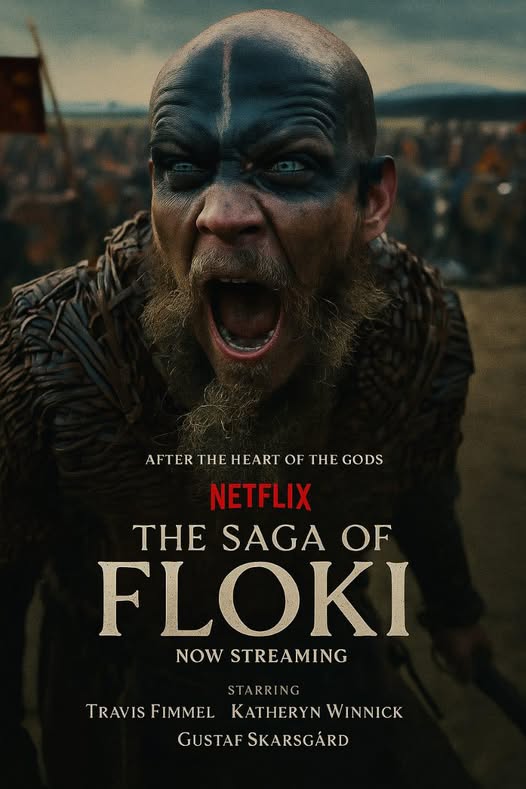
Supporting characters are equally compelling. Floki’s companions represent the spectrum of human response to faith: loyal followers who see divinity in his visions, skeptical friends who fear for his sanity, and rivals who see opportunity in his downfall. These relationships give the story depth and provide the moral counterpoints necessary for its themes to resonate.
Cinematic Beauty and Brutality
Visually, The Saga of Floki is stunning. The cinematography captures the stark beauty of the Viking world with sweeping shots of storm-lashed seas and fjords cloaked in mist. At the same time, it does not shy away from the brutality of the era. Battles are visceral, rituals are raw, and even moments of peace are shadowed by the harsh realities of survival.
The score, blending Nordic chants with haunting orchestral movements, enhances the sense of both grandeur and unease. Viewers are transported not only to a different time and place but into the very psyche of a man caught between devotion and destruction.
Themes That Resonate Today
While rooted in Viking history and legend, The Saga of Floki speaks directly to modern audiences. Its themes of faith, obsession, leadership, and the fine line between genius and madness are timeless.
- Faith and Doubt: In an age where belief still drives personal and political decisions, Floki’s story reminds us of the power and peril of conviction.
- The Cost of Vision: Innovators, prophets, and dreamers often walk a line that others fear to tread. But at what cost do we follow them?
- Community Versus Isolation: Floki’s journey highlights the tension between serving a community and succumbing to solitary obsession.
- Truth and Perception: In a world where reality is often filtered through personal belief, the question remains: who decides what is true?
These questions make the film not just entertainment, but a cultural reflection.
Why This Netflix Epic Stands Out
There have been countless depictions of Vikings on screen—from blood-soaked TV dramas to mythological blockbusters. What sets The Saga of Floki apart is its willingness to slow down and focus on one man’s inner struggle.
Rather than glorify violence or romanticize conquest, the film digs into the psychological and spiritual world of its protagonist. In doing so, it captures something rarely seen in Viking narratives: the fragility of belief and the devastating consequences of obsession.
It is not simply a story about battles and voyages—it is about the battle within.
Audience Reception and Debate
Already, the film has sparked debate among viewers. Some praise it as a masterpiece of character-driven storytelling that challenges audiences to think deeply about faith and leadership. Others criticize its ambiguity, longing for clearer answers about Floki’s true nature.
But perhaps that is the point. By refusing to provide easy resolutions, The Saga of Floki forces us to sit with discomfort—the very discomfort that faith, doubt, and madness always bring.
A Legacy in the Making
It is too early to say whether The Saga of Floki will stand among Netflix’s greatest original productions, but it has all the ingredients of a lasting work. Its blend of historical authenticity, psychological depth, and visual spectacle ensures that it will be remembered not just as another Viking story, but as a bold experiment in epic filmmaking.
For fans of historical drama, mythology, or simply great cinema, this is not a film to miss.
Conclusion: Walking the Razor’s Edge
The Saga of Floki is more than entertainment—it is a haunting meditation on the razor’s edge between faith and madness. Through its rich storytelling and unforgettable visuals, it captures the tragedy and triumph of a man who dared to see the world differently, even if it destroyed him.
As the credits roll, one question lingers: was Floki a visionary blessed by the gods, or a madman consumed by his own illusions? The film offers no answer, leaving that decision in the hands of its audience.
And perhaps that is the genius of Netflix’s latest epic: it reminds us that the line between faith and madness is as thin as the blade of a Viking sword.