Coldplay preaching love over Charlie Kirk’s death is all well and good. But would it hurt artists to take a stand? That single question captures the tension between music as a universal balm and art as a political force. In the aftermath of Kirk’s shocking assassination, artists from around the world weighed in. Some offered condolences, some chose silence, and others—like Coldplay—leaned on their familiar refrain: love conquers all.
But is “love” enough in a climate where political violence has become one of the greatest threats to democracy, free speech, and human dignity? Or should artists, especially those with massive platforms, risk alienating fans by taking a stand on issues that divide us?
This blog explores the balance between art as comfort and art as confrontation, using Coldplay’s response as the springboard for a broader discussion on the role of artists in times of political turmoil.
Music and Tragedy: A Long Tradition
Throughout history, musicians have stepped into moments of national crisis to help audiences process grief, anger, or shock. From Bob Dylan’s protest songs of the 1960s to U2’s impassioned activism around human rights, artists have often seen their role as both healer and agitator.
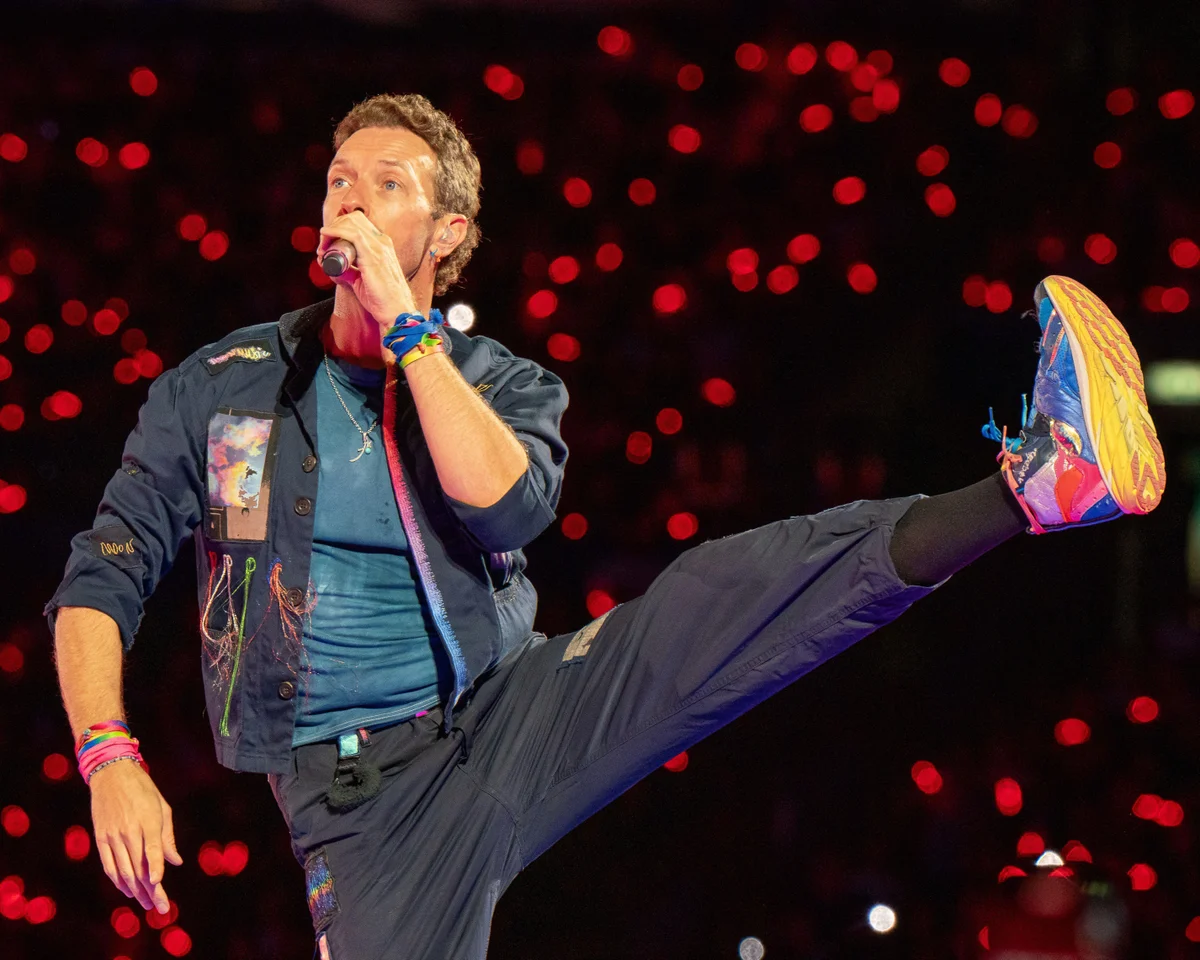
Coldplay, by contrast, has consistently chosen the language of love and unity. Whether through their anthemic choruses or their colorful live shows filled with fireworks and rainbow lights, they project an ethos that is less about confrontation and more about collective healing.
It is no surprise, then, that after Charlie Kirk’s assassination, the band leaned on familiar territory: a call for compassion, empathy, and, ultimately, love.
The Appeal of Coldplay’s Approach
There is undeniable power in responding to violence with love. Hatred breeds more hatred; cycles of revenge spiral endlessly. A call for peace and compassion can act as a grounding force. For millions of fans, Coldplay’s music offers a sanctuary away from political bitterness, a reminder that beyond ideology, we share the same humanity.
In moments of loss, the simplicity of “love over hate” resonates. It’s easy to digest, difficult to contest, and accessible to all. At its best, it feels like a universal prayer for healing, one that transcends political affiliations.
The Criticism: Is Love Enough?
Yet, critics argue that in this moment, love as a message feels incomplete. Charlie Kirk was not just a private individual—he was a political figure who provoked strong reactions, for and against. His assassination was not only a personal tragedy but also a violent escalation of America’s political polarization.
For some, artists who simply preach love risk being seen as avoiding the deeper issue: the culture of political violence and the toxic rhetoric fueling it. After all, music has long been used as a tool not just to soothe but to confront, to demand change, to call out injustice.
Bob Marley didn’t just sing about love; he sang about liberation. Billie Holiday didn’t just sing beautifully; she sang “Strange Fruit” to force audiences to face the horrors of lynching. Rage Against the Machine didn’t strum lullabies; they roared about systemic oppression.
In that lineage, Coldplay’s “love is all we need” feels, to some, like a sidestep.
The Risk for Artists Who Take a Stand
Of course, the criticism of Coldplay’s approach assumes that all artists should be political. But should they? That’s not so simple.
Taking a stand carries risks. In today’s hyper-polarized climate, artists who voice strong political opinions often face backlash, boycotts, and online abuse. Some fans demand that musicians “stay in their lane” and avoid politics altogether. Others criticize artists who don’t speak out, accusing them of cowardice.
It’s a no-win situation for many artists.
- Speak out strongly: Risk alienating half your audience, damaging sales, and becoming a lightning rod for controversy.
- Stay neutral: Risk being accused of complicity, apathy, or playing it safe when voices are needed most.
Coldplay’s choice to preach love may stem from a desire to rise above partisan divides, to remain accessible to all listeners regardless of political affiliation. But in doing so, they also expose themselves to accusations of being shallow or evasive.
What Fans Expect from Artists
Audiences are not uniform. Some fans want their favorite artists to be political leaders; others want music as an escape from politics.
- Fans Who Want Activism
These listeners see musicians as cultural leaders with the power to shape discourse. To them, silence is complicity. If artists aren’t using their voices to condemn political violence or promote specific reforms, they’re missing their duty. - Fans Who Want Escapism
Others argue that the news is saturated with politics, division, and fear. They turn to music to escape that noise. For them, Coldplay’s message of love is exactly what’s needed: a respite, not a lecture.
Both perspectives are valid, but they highlight the difficult position artists occupy in today’s world.
When Love Meets Action
Perhaps the tension lies not in love itself but in how it is expressed. Love, after all, can be passive or active. Passive love offers comfort, words of empathy, and broad platitudes. Active love confronts injustice, demands accountability, and risks vulnerability.
Coldplay’s brand of love has largely been the former: big anthems, rainbow confetti, messages of unity. But what if artists used love as a starting point for more tangible action? What if love meant not just calling for peace but calling out violence—naming it, shaming it, and demanding better?
Imagine if Coldplay’s message after Kirk’s death had been: “We believe in love, but we also believe love means protecting life, rejecting violence, and holding leaders accountable for fueling division.” That kind of love is harder, riskier, but perhaps more transformative.
The Historical Precedent
History suggests that some of the most enduring art arises when artists balance love with confrontation:
- John Lennon’s “Imagine” was a love song, yes—but also a political manifesto about a world without borders or religion.
- Nina Simone sang with love for her people, but also with fury against racism and violence.
- Bruce Springsteen combined empathy for working-class struggles with direct critiques of economic injustice.
These artists remind us that love and activism are not mutually exclusive. Love can be the fire that fuels activism.
Coldplay’s Legacy at a Crossroads
Coldplay’s career has been built on accessibility, optimism, and inclusivity. They’ve rarely been overtly political, and when they have, it’s been in broad, humanitarian strokes: climate change, global poverty, universal human rights.
Their response to Charlie Kirk’s assassination fits neatly within that legacy. Yet, the criticism they now face suggests their audience—perhaps society as a whole—expects more from artists today.
The question is whether Coldplay, or artists like them, are willing to evolve from preaching love to embodying it in a way that tackles the hardest issues head-on.
Conclusion: Beyond the Confetti
Coldplay preaching love over Charlie Kirk’s death is all well and good. Love is a necessary response to hate, and few artists have championed it more effectively than they have. But the moment we’re living in may require more than confetti and choruses. It may require artists to pair their calls for love with calls for justice, accountability, and courage.
Would it hurt artists to take a stand? Perhaps. They risk backlash, lost fans, and political entanglement. But would it help? Absolutely. Artists have always been at their most powerful when they remind us not only of our shared humanity but also of our shared responsibility to protect it.
Love is the beginning—but maybe it’s not the end.