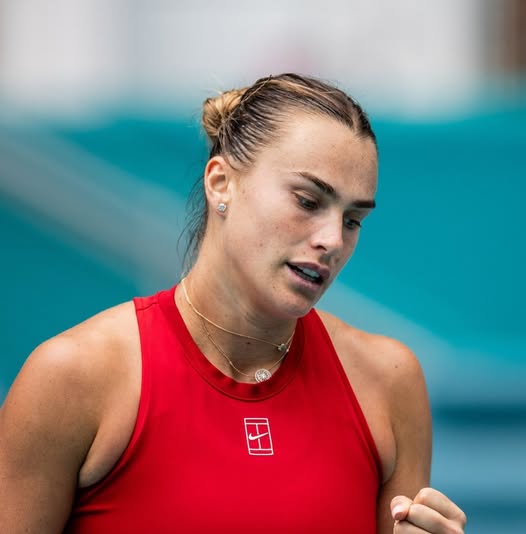
Introduction: Why the 2026 Australian Open Will Redefine the WTA Power Map
Every January, the Australian Open doesn’t just crown a champion — it reprograms the WTA rankings.
But the 2026 Australian Open carries a special kind of tension. That’s because four of the biggest stars in women’s tennis — Aryna Sabalenka, Iga Świątek, Coco Gauff, and Madison Keys — are walking into Melbourne with massive ranking points to defend.
And when you defend big points, you face big danger.
Lose early, and you don’t just lose a match —
you lose ranking security, seeding advantage, endorsement leverage, and season momentum.
This article breaks down:
- Exactly how many points each star could drop
- Why their rankings are at risk
- Who stands to benefit
- What it means for the 2026 WTA title race
If you want to understand the real drama behind the Australian Open, this is it.
Why Australian Open Points Matter More Than Any Other Slam
The Australian Open awards the same ranking points as the other Grand Slams — but in practice, they are more dangerous.
Why?
Because they sit at the very beginning of the season.
This means:
- Rankings from Melbourne shape seeding for the next four months
- Early-season tournaments depend on those rankings
- A bad Australian Open can destroy half a season
Here’s the Grand Slam points structure:
| Result | Points |
|---|---|
| Champion | 2,000 |
| Runner-up | 1,300 |
| Semifinalist | 780 |
| Quarterfinalist | 430 |
| Round of 16 | 240 |
| Round of 32 | 130 |
| Round of 64 | 70 |
| First Round | 10 |
Now imagine defending 2,000 points — and losing in round three.
That’s a 1,870-point collapse.
That’s the nightmare scenario facing several WTA superstars in 2026.
Aryna Sabalenka: The 2,000-Point Time Bomb
Defending: Australian Open Champion
Aryna Sabalenka enters Melbourne as one of the most exposed players in the entire tournament.
Why?
Because she is defending the maximum possible points: 2,000.
That makes her the biggest ranking-risk athlete in the women’s draw.
If Sabalenka:
- Loses in the final → loses 700 points
- Loses in the semis → loses 1,220 points
- Loses in the quarters → loses 1,570 points
- Loses before week two → catastrophic
Why Sabalenka Is Vulnerable
Despite her power, Sabalenka’s game carries volatility:
- High double-fault rate
- Risk-heavy returns
- Emotional swings in long matches
Melbourne’s fast courts amplify this danger.
One bad service day could erase her world No. 1 ambitions overnight.
FAQ: Can Sabalenka still stay No. 1 if she loses early?
Only if Iga Świątek and Coco Gauff also collapse — which is highly unlikely.
Iga Świątek: Defending Pressure in a Hostile Environment
Defending: Deep run (Semifinal or Final)
Świątek arrives in Australia with a heavy points burden as well — likely 780 to 1,300 points.
That’s dangerous because:
- Australia is historically her weakest Slam
- Faster courts blunt her heavy topspin
- Big hitters target her forehand
Why Swiatek’s Ranking Is at Risk
Świątek’s game thrives on:
- High bounce
- Long rallies
- Clay-court patterns
Melbourne offers the opposite.
One aggressive opponent can knock her out early — and that would mean losing over 1,000 points in one blow.
FAQ: Has Iga ever won the Australian Open?
No — and that’s exactly why the pressure is enormous.
Coco Gauff: The Rising Queen With 1,000+ Points to Defend
Defending: Semifinalist or Quarterfinalist
Coco Gauff enters 2026 defending approximately 780 to 1,300 points.
That’s a huge number for a player who relies on:
- Athleticism
- Defense
- Long rallies
Those strengths are tested on Melbourne’s faster courts.
Why Gauff Is Under Real Threat
Gauff is now hunted.
She is no longer underestimated.
Every opponent:
- Targets her forehand
- Attacks second serves
- Drags her into baseline exchanges
One slow start — and she could lose hundreds of ranking points instantly.
FAQ: Could Gauff drop out of the Top 3?
Yes — if she exits before the quarterfinals.
Madison Keys: The Silent Ranking Cliff
Defending: Deep Run
Madison Keys quietly enters Melbourne with a massive ranking burden.
Her explosive game brought her far last year — but it also makes her fragile:
- High-risk ball striking
- Injury history
- Boom-or-bust performances
If Keys fails to repeat her run, she could lose 600 to 1,000 points — which would push her out of the Top 10 conversation.
FAQ: Why does Keys matter in this ranking story?
Because she sits right at the cut line between elite and expendable.
Who Stands to Gain the Most?
Every point lost by Sabalenka, Świątek, Gauff, and Keys becomes opportunity for:
- Elena Rybakina
- Jasmine Paolini
- Zheng Qinwen
- Mirra Andreeva
- Ons Jabeur
These players have less to defend — meaning they can climb fast.
One deep run could equal a Top-5 breakthrough.
Why This Australian Open Will Be Brutal
This is not just another Grand Slam.
It is a ranking reset bomb.
For four superstars:
- The pressure is immense
- The margin for error is zero
- The stakes are career-level
One early loss could:
- Cost endorsement bonuses
- Drop seeding
- Change Slam paths for the entire season
This is chess played with rackets.
Conclusion: The Australian Open That Will Rewrite Women’s Tennis
The 2026 Australian Open is not about trophies alone.
It is about:
- Survival
- Ranking power
- Legacy protection
Aryna Sabalenka faces the biggest cliff in women’s tennis.
Iga Świątek fights history and surface.
Coco Gauff battles expectation and pressure.
Madison Keys stands on the edge of elite status.
When Melbourne begins, the rankings won’t wait.
And by the time it ends, the entire WTA hierarchy could look completely different.