Introduction: When One Olympic Dream Isn’t Enough
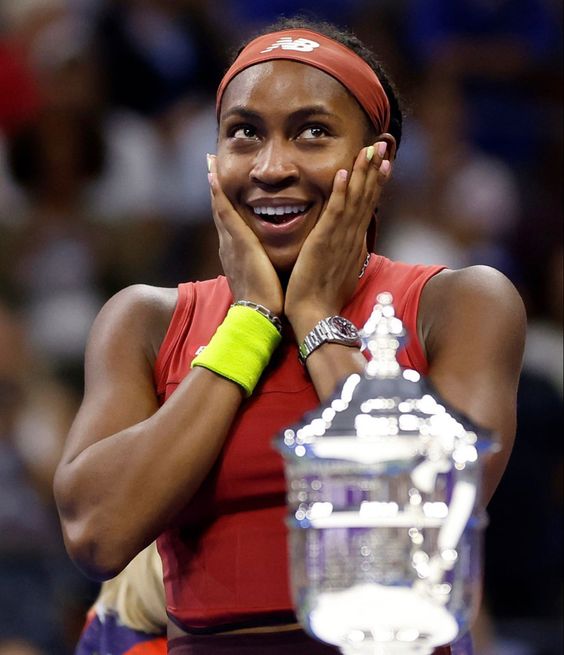
Coco Gauff is widely celebrated as one of the most electrifying talents in modern tennis. A Grand Slam champion, world No. 1 contender, and global sports icon, she represents the pinnacle of excellence on the court. Yet, in a candid and thought-provoking revelation, Gauff recently admitted that she “strongly” felt she could have competed at the Olympic Games in a sport other than tennis.
That statement instantly sparked curiosity across the sports world.
How could a tennis superstar realistically imagine herself competing in another Olympic discipline? Which sports did she have in mind? And more importantly, what does this say about elite athleticism, multi-sport potential, and the future of Olympic competition?
This article explores Coco Gauff’s belief in her Olympic versatility, the sports she could plausibly have excelled in, the science behind multi-sport athleticism, and why her statement resonates far beyond personal confidence. Using data, expert insights, and storytelling, we unpack why this is more than just a hypothetical—and why it matters right now.
Coco Gauff: Built for More Than Tennis
Before examining alternative Olympic sports, it’s critical to understand why Coco Gauff stands apart physically and mentally.
Elite Athletic Profile at a Glance
- Explosive speed and acceleration
- Exceptional hand-eye coordination
- High anaerobic endurance
- Mental resilience under pressure
- Advanced tactical intelligence
According to performance analytics, elite tennis players rank among the top 1% of all athletes in agility, reaction time, and repeated sprint ability. Gauff, in particular, consistently records some of the fastest court coverage speeds on the WTA Tour.
These traits are not tennis-exclusive. They are foundational skills across multiple Olympic sports.
Why Gauff ‘Strongly’ Believes She Could Have Competed Elsewhere
Confidence alone does not fuel Olympic-level ambition. Gauff’s belief is rooted in early multi-sport exposure, physical adaptability, and elite training infrastructure.
In interviews, she has emphasized:
- Growing up playing multiple sports
- Being encouraged to explore athletic versatility
- Training methods that mirror those used in Olympic sprinting and team sports
This mindset reflects a growing trend among elite athletes who recognize that sport specialization does not define athletic potential.
7 Olympic Sports Coco Gauff Could Realistically Have Competed In
1. Track and Field (Sprinting Events)
Among all Olympic alternatives, track sprinting stands out as the most realistic.
Why Sprinting Fits Gauff
- Explosive first-step acceleration
- Strong lower-body power
- Efficient stride mechanics
- Anaerobic endurance
Elite tennis points last between 3–10 seconds, mirroring the metabolic demands of 100m and 200m sprint events. Sports science research shows that top tennis athletes often post sprint metrics comparable to national-level sprinters.
Key Insight: With early specialization in track, Gauff’s speed and strength profile suggests she could have transitioned successfully.
2. Basketball
Standing at approximately 5’9” with elite agility, Gauff possesses attributes highly valued in women’s basketball.
Transferable Skills
- Court vision and spatial awareness
- Explosive lateral movement
- Mental composure under pressure
- Leadership instincts
Basketball and tennis share similar demands in reaction time and decision-making. Many WNBA players began as multi-sport athletes, and Gauff’s coordination would have given her a strong foundation.
3. Soccer (Football)
Soccer is another sport where Gauff’s endurance and agility would shine.
Why Soccer Makes Sense
- Exceptional footwork
- High cardiovascular capacity
- Quick transitions between offense and defense
- Tactical intelligence
Elite female soccer players cover 10–12 kilometers per match, a workload comparable to extended tennis matches. Gauff’s conditioning and mental toughness align seamlessly with the sport’s demands.
4. Athletics: Long Jump or Triple Jump
Explosive jumping events reward power, speed, and timing—three areas where Gauff excels.
Scientific Match
- High vertical leap capacity
- Fast approach speed
- Neuromuscular coordination
Many Olympic jumpers have backgrounds in sprinting or tennis-style training. With technical coaching, Gauff’s raw athleticism could have been refined for elite competition.
5. Volleyball
Volleyball values reaction speed, jumping ability, and spatial awareness—traits Gauff displays consistently on court.
Why Volleyball Is Plausible
- Quick reflexes
- Strong hand-eye coordination
- Explosive vertical movements
- Team-based adaptability
Volleyball players rely on split-second decisions similar to returning a 120 mph serve.
6. Gymnastics (Early Specialization Scenario)
While gymnastics requires extremely early specialization, Gauff’s coordination and body control hint at potential had she started younger.
Reality Check
- Not realistic at her current age
- Hypothetically viable with early training
- Highlights her neuromuscular adaptability
This example underscores the breadth of her athletic ceiling rather than a practical transition.
7. Flag Football (Future Olympic Sport)
With flag football set to debut at the 2028 Los Angeles Olympics, new doors are opening.
Why Gauff Fits
- Speed and agility
- Strategic awareness
- Quick directional changes
- Low-contact, skill-focused format
This emerging Olympic discipline favors elite athletes from diverse backgrounds, making Gauff’s belief even more relevant.
The Science of Multi-Sport Excellence
What Research Says
Studies show that athletes who play multiple sports before age 15:
- Reduce injury risk by up to 50%
- Develop superior motor skills
- Exhibit higher long-term performance ceilings
Gauff’s development aligns with this model, reinforcing her belief as scientifically sound rather than speculative.
Frequently Asked Questions (FAQ)
Did Coco Gauff ever train seriously in another sport?
While tennis became her primary focus early, Gauff participated in various athletic activities during childhood, building a broad foundation of skills.
Has any tennis player competed in the Olympics in another sport?
Historically, some athletes transitioned between sports before specialization, though modern Olympic schedules make dual-sport competition rare.
Could Gauff still compete in another Olympic sport?
Realistically, elite Olympic success requires years of specialization. However, emerging sports like flag football offer new possibilities.
Why do elite athletes believe they can succeed in other sports?
Because elite athletic traits—speed, coordination, endurance, mental toughness—are transferable across disciplines.
Does this diminish her tennis focus?
Not at all. In fact, such confidence reflects peak mental performance, not distraction.
Why Gauff’s Statement Resonates Globally
Gauff’s comments strike a chord because they challenge a long-standing narrative: that athletes must be defined by a single lane.
In an era where:
- Youth burnout is rising
- Injury rates are increasing
- Olympic sports are evolving
Her belief promotes a healthier, more dynamic vision of athletic development.
Business and Branding Implications
From a commercial perspective, Gauff’s multi-sport appeal:
- Enhances brand versatility
- Expands endorsement opportunities
- Aligns with Olympic storytelling
- Strengthens her global marketability
Brands increasingly value athletes who embody versatility, confidence, and inspiration—qualities Gauff exemplifies.
What This Means for the Future of Sports
Coco Gauff’s statement is not just personal—it’s symbolic.
It signals:
- A shift toward multi-dimensional athlete identities
- Greater openness to crossover sports
- A future Olympics that rewards adaptability
As new disciplines emerge and training science evolves, athletes like Gauff will define what’s possible.
Conclusion: More Than a Thought—A Statement of Limitless Potential
When Coco Gauff said she “strongly” felt she could have competed at the Olympics in a sport other than tennis, she wasn’t diminishing her achievements. She was expanding the conversation.
Her belief reflects:
- Elite-level self-awareness
- Scientific athletic reality
- A future-facing mindset
In a world that often tells athletes to choose one path and stay there, Gauff’s confidence is a powerful reminder: true greatness is not confined—it’s transferable.