For more than two decades, Placebo has been one of rock’s most enigmatic and emotionally charged bands — a group that has always existed on the edge, musically and personally. Known for their raw lyrics, haunting melodies, and unapologetic exploration of pain, identity, and addiction, the band carved out a distinct legacy that resonated far beyond the alternative scene.
Now, Netflix is peeling back the curtain on the world that existed behind their music. The new documentary, Placebo: The Chaos Within, offers fans an unprecedented look inside the band’s tumultuous rise, their creative brilliance, and the darkness that almost tore them apart.
What emerges is not just a story of a rock band—it’s a portrait of survival, obsession, and art born out of chaos.
The Rise of an Unlikely Revolution
In the mid-1990s, when Britpop and grunge dominated the airwaves, Placebo appeared as something of an anomaly. Frontman Brian Molko, with his androgynous style and piercing honesty, challenged every convention the rock scene had built. Alongside guitarist-bassist Stefan Olsdal, the band fused glam rock energy with emotional vulnerability, singing about alienation, love, and addiction at a time when few dared to.
Their debut album, Placebo (1996), was a thunderclap. Songs like “Nancy Boy” and “Teenage Angst” weren’t just hits—they were rallying cries for those who felt like outsiders. The band’s aesthetic—part glitter, part grit—broke barriers and defined a generation of fans who finally saw themselves reflected in rock music’s mirror.
But behind the success, the seeds of chaos were already taking root.
Darkness Behind the Fame
Netflix’s documentary dives deep into what it calls “the unspoken decade”—the early 2000s, when Placebo’s fame skyrocketed, and their demons grew louder.
Through unseen footage and raw interviews, the film captures the double-edged sword of success: sold-out tours and critical acclaim on one hand, but emotional collapse and addiction on the other.
Brian Molko’s confessional tone is the emotional heartbeat of the documentary. “We were living the dream,” he says in one clip, “but it was a dream built on no sleep, too much alcohol, and a fear of who we were when the music stopped.”
For the first time, the band opens up about the internal battles that threatened to destroy them—the creative clashes, the suffocating pressure from fame, and the moments when they questioned whether the band could survive another year.
Addiction, Identity, and the Music That Saved Them
At its core, Placebo: The Chaos Within is about transformation. The film doesn’t shy away from the band’s struggles with addiction and self-destruction, but it also shows how those same experiences fueled some of their most powerful music.
Albums like Without You I’m Nothing (1998) and Black Market Music (2000) reflected the band’s inner turmoil—filled with songs that sounded like confessions whispered through distortion. Molko’s lyrics about pain and desire weren’t just poetry; they were lifelines.
In one emotional segment, Stefan Olsdal recalls nights when the band nearly collapsed under its own intensity. “There were times when we didn’t speak for weeks,” he admits. “We’d go on stage, play like our lives depended on it, then walk off and not look at each other.”
The honesty is jarring—and deeply human.
Behind-the-Scenes Footage Fans Have Never Seen
The documentary gives fans what they’ve been craving for years: unfiltered access.
Hidden away in old hard drives and storage lockers, the filmmakers unearthed hours of behind-the-scenes footage from tours, studio sessions, and hotel rooms. There are no glamorous rock-star moments here—just raw, chaotic, sometimes heartbreaking glimpses of a band barely holding it together.
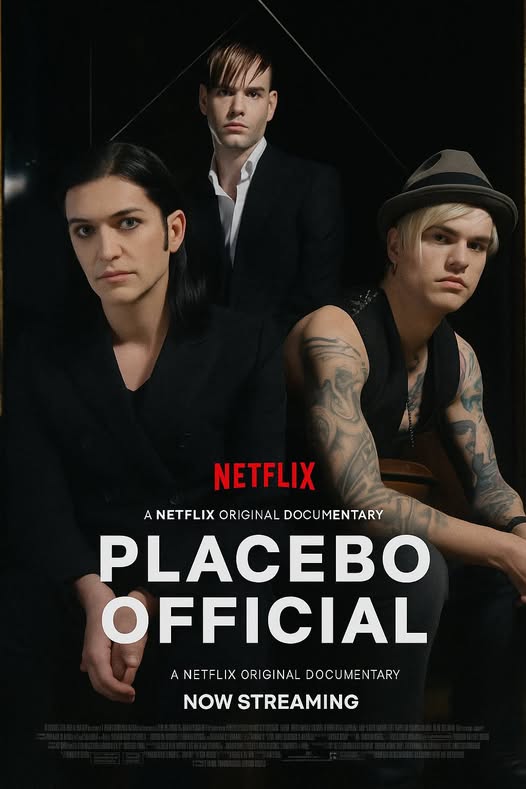
One particularly powerful scene shows Placebo recording their hit “Every You, Every Me.” The tension is palpable. Molko, visibly exhausted, lashes out during takes. Later, the camera captures him sitting alone in the studio, staring blankly at the console—a haunting image that says more than words ever could.
Through these moments, Netflix doesn’t just tell Placebo’s story; it immerses viewers in it. You can almost feel the claustrophobia of fame, the intensity of artistic obsession, and the relief of survival.
The Turning Point: Redemption Through Reinvention
Every great rock story has a breaking point—and for Placebo, that moment came in the mid-2000s. After years of relentless touring and self-destruction, the band faced a choice: fall apart completely, or rebuild.
In The Chaos Within, both Molko and Olsdal recall a moment of clarity. “We realized that if we didn’t change, we wouldn’t make it out alive,” says Molko. “The band was either going to be our salvation or our funeral.”
The documentary chronicles their painful but inspiring process of recovery and reinvention. They went quiet for a while—focusing on therapy, sobriety, and creative rebirth. The result was Meds (2006), an album that marked a turning point both musically and emotionally.
It wasn’t just about survival anymore. It was about purpose.
A Visual and Emotional Masterpiece
Visually, Placebo: The Chaos Within is stunning. Netflix has crafted a cinematic experience that matches the band’s aesthetic—dark, poetic, and unpredictable.
Archival footage blends seamlessly with stylized reenactments, moody concert visuals, and interviews filmed in stark black and white. The score, featuring reimagined Placebo tracks, heightens the emotion, transforming familiar songs into haunting soundscapes that echo the band’s evolution.
Critics who have previewed the film describe it as “emotionally unflinching” and “a raw meditation on fame and fragility.” It’s not a documentary that glorifies the chaos—it confronts it head-on.
Confronting the Myths
For years, fans and the media built myths around Placebo—about their sexuality, their supposed feuds, their wild nights, and their creative eccentricities. Netflix’s documentary tears those myths apart with empathy and honesty.
Molko opens up about his experiences with gender fluidity and identity long before it was widely discussed in mainstream music. “People wanted to label us,” he says. “But I never fit in any of their boxes.”
That tension between self and society becomes one of the film’s strongest themes. The Chaos Within isn’t just about a band—it’s about how authenticity can both save and scar you in a world that demands conformity.
The Legacy of a Band That Refused to Break
As the documentary reaches its closing chapters, it’s hard not to feel a deep respect for what Placebo has endured. The band’s ability to channel their chaos into art, to find beauty in pain, has defined their legacy.
They didn’t just survive the music industry—they transcended it.
From their early days as provocateurs to their evolution into elder statesmen of alternative rock, Placebo’s story mirrors that of many artists who walked the fine line between brilliance and breakdown. But unlike many of their peers, they emerged with both their art and their humanity intact.
Why This Documentary Matters Now
In an age where the line between fame and burnout grows thinner by the day, Placebo: The Chaos Within feels urgent and timely. It speaks to a generation grappling with identity, addiction, and the pressure to perform—whether on stage or online.
It also invites fans to reflect on their own connection to the music. For those who found solace in Placebo’s songs, this film offers closure, understanding, and a reminder of why the band mattered so deeply in the first place.
Netflix has turned the story of one band’s implosion into a universal meditation on what it means to live authentically—and the price that comes with it.
A Final Note: The Power of Vulnerability
In the film’s final scene, Molko stands on stage during a recent tour, silhouetted against blinding lights. The crowd roars, but his voice is calm. “We made it through,” he says, almost to himself. “And that’s enough.”
It’s a moment of quiet triumph—the culmination of everything Placebo has endured.
For fans, it’s a reminder that art often comes from the darkest places, and that survival itself can be the greatest act of rebellion.
Conclusion: The Chaos Within Us All
Inside the Untold Chaos of Placebo is more than a documentary—it’s an emotional reckoning. It’s about how creativity and destruction often dance together, how fame magnifies every wound, and how truth, once faced, can heal.
Netflix’s explosive new documentary doesn’t just reveal the secrets behind Placebo’s darkest years; it reminds us that chaos, when channeled into art, can become something transcendent.
Because sometimes, the most beautiful music comes from the most broken places.