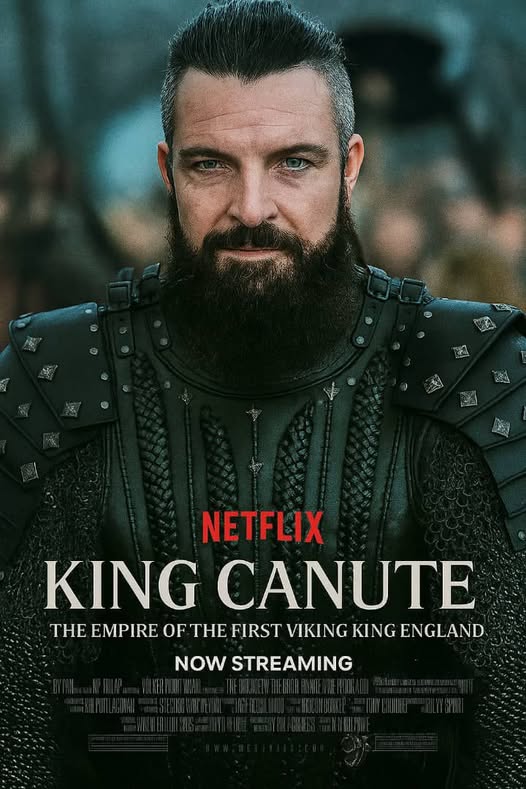
Netflix has done it again—turning history into compelling storytelling by bringing to life one of the most fascinating yet often overlooked figures in medieval Europe: King Canute the Great. Dubbed by historians as England’s first true empire builder, Canute wasn’t just another Viking warlord. He was a strategist, a ruler of vision, and a man whose legacy reshaped the British Isles and beyond.
With Netflix now shining a spotlight on him, it’s the perfect time to revisit the story of the Viking conqueror who went from outsider invader to one of the most powerful monarchs in European history.
Who Was King Canute?
Canute (sometimes spelled Cnut or Knut) was the son of Sweyn Forkbeard, King of Denmark, and part of a dynasty that carried the blood of Scandinavian conquerors. Born around 995 AD, Canute grew up during the height of the Viking Age, when Norsemen were feared across Europe for their daring raids, naval superiority, and warrior ethos.
By the time he was a young man, Viking armies had already made their presence felt in England. Canute would not only continue that legacy but transform it into something larger: an empire that stretched across Denmark, Norway, and England, with influence even reaching into Scotland and parts of Sweden.
Netflix’s Vision: History Meets Drama
Netflix’s choice to highlight Canute is significant. Much like their depictions of Ragnar Lothbrok or Lagertha in other Viking-inspired series, the streaming giant knows that audiences crave complex, flawed, and powerful characters.
King Canute’s story is tailor-made for the screen:
- Epic Battles: From storming English shores to crushing rival claimants, Canute’s reign was defined by warfare.
- Political Intrigue: He had to balance Viking customs with English expectations, forging alliances through marriage and diplomacy.
- Religious Tension: A pagan-raised warrior who eventually embraced Christianity, Canute symbolizes the clash of two worlds.
- Personal Complexity: Ruthless when needed yet pragmatic, Canute’s reign shows the blend of brutality and statecraft that defined medieval kingship.
Netflix’s portrayal is expected to dramatize these elements, turning a once dusty historical name into a living, breathing character that modern audiences can root for—or fear.
The Conquest of England: From Invader to King
In 1013, Canute’s father Sweyn Forkbeard briefly seized the English throne from King Æthelred the Unready, but Sweyn died suddenly the following year. Canute tried to hold onto the throne, but English resistance forced him back to Denmark.
By 1015, however, Canute returned with a vengeance. Leading a massive Viking army, he embarked on a campaign that would last nearly two years. Through sieges, battles, and alliances, Canute systematically dismantled English resistance.
In 1016, he defeated Edmund Ironside, son of Æthelred, at the Battle of Assandun. A treaty followed that divided England between the two rulers. When Edmund died later that same year, Canute claimed the entire kingdom for himself.
This was not just a victory of the sword—it was the beginning of a reign that would reshape English governance.
Canute as Empire Builder
Unlike other Viking rulers who plundered and left, Canute understood that real power lay in ruling, not raiding. His reign from 1016 to 1035 demonstrated qualities beyond the battlefield.
- Consolidating England
Canute kept much of the existing Anglo-Saxon administrative system intact, relying on local earls and councils while placing trusted Danes in key positions. This balance allowed him to stabilize the kingdom while asserting his authority. - Religious Legitimacy
Though raised in the old Norse pagan traditions, Canute converted to Christianity. By supporting the Church, building monasteries, and funding religious institutions, he won over influential bishops and the broader Christian population. - Diplomacy and Alliances
Canute married Emma of Normandy, the widow of Æthelred, thereby linking himself to the Norman dynasty that would later play its own major role in English history. This strategic marriage also strengthened his legitimacy as king. - The North Sea Empire
Canute didn’t stop with England. By the 1020s, he controlled Denmark, Norway, and parts of Sweden—creating what some historians call the North Sea Empire. This made him one of the most powerful rulers of his time, bridging Scandinavia and the British Isles.
Myths and Legends: The Tide That Would Not Turn
Perhaps the most famous story associated with King Canute is the legend of him commanding the tide to halt.
According to later chronicles, Canute once placed his throne by the seashore and ordered the tide not to rise. When the sea inevitably ignored him, he used the moment to demonstrate to his courtiers the limits of earthly power, reminding them that only God commanded nature.
Whether this event actually happened is debatable, but it endures as a metaphor. Unlike arrogant kings who believed themselves divine, Canute is remembered as a ruler with humility and wisdom—at least in legend.
Netflix’s King Canute: What to Expect
Netflix’s dramatization of Canute is expected to highlight these dualities:
- The ruthless conqueror who brought England under Viking control.
- The pragmatic ruler who embraced Christianity and English institutions.
- The ambitious empire builder who dreamed beyond raids and spoils.
Audiences can expect cinematic naval battles, clashes between pagan rituals and Christian ceremonies, and intense political rivalries. But more importantly, they’ll see the rise of a man who redefined what it meant to be both Viking and king.
Why King Canute Still Matters Today
Why should we care about a Viking king who died nearly 1,000 years ago? The answer lies in his legacy.
- A United England
Canute’s reign demonstrated that England could be unified under strong centralized rule, a precursor to the later monarchies that would define British history. - Cultural Blending
His rule brought together Viking and Anglo-Saxon traditions, influencing everything from law to art to religion. Modern Britain is, in part, a product of this cultural fusion. - Lessons in Leadership
Canute showed that raw power alone is not enough to sustain a kingdom. Diplomacy, religion, and respect for institutions are just as vital. - The Global Appeal of Viking Stories
Vikings remain a cultural fascination because they represent both brutality and bravery, destruction and discovery. Canute embodies these contradictions, making his story timeless.
The Broader Viking Revival
Netflix’s spotlight on Canute also reflects a broader revival of interest in Viking history and mythology. From TV shows and films to video games and books, audiences remain captivated by Norse culture.
Why? Because Viking stories are not just about conquest—they’re about ambition, resilience, and identity. They speak to the human struggle between chaos and order, tradition and change, power and humility.
In King Canute, all of these themes converge.
Conclusion: A King Worth Remembering
With “Netflix unleashing King Canute”, history once again finds new life in modern storytelling. The Viking conqueror who once united England, Denmark, and Norway was more than a warrior—he was an empire builder, a political strategist, and a ruler whose decisions still echo in the chronicles of Europe.
As audiences watch his rise on screen, they will encounter not just the legend of the man who faced the tide, but the reality of a leader who stood at the crossroads of Viking ferocity and medieval statecraft.
King Canute deserves this moment in the cultural spotlight—not just as a conqueror, but as a visionary whose empire laid the groundwork for the Europe we know today.